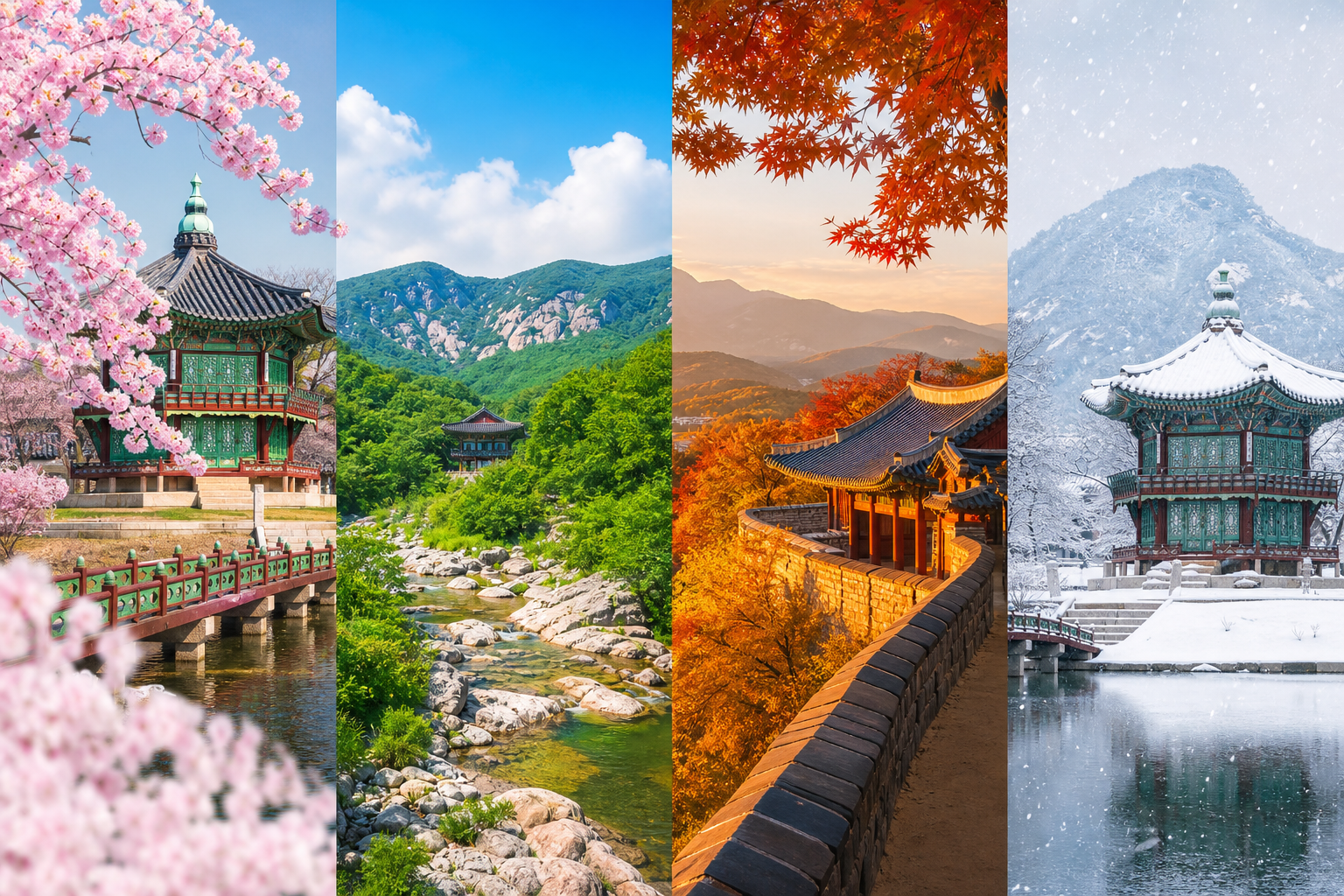
One of the first big decisions in planning a Korea trip is not where to stay or what to eat.
It is when to go.
That choice shapes almost everything else:
- what your days feel like
- how much walking you enjoy
- what you pack
- what kind of scenery you get
- whether your trip feels easy or physically draining
The good news is that Korea is a destination with four very distinct seasons, which means you can have a great trip at different times of year.
The more important question is not:
- “What is the one perfect month for everyone?”
The better question is:
- “Which season fits my travel style best?”
For most first-time travelers, the easiest overall answer is usually spring or autumn.
Those are generally the most comfortable seasons for walking, sightseeing, and day-to-day travel. But that does not mean summer or winter are bad choices. They are simply stronger for more specific trip goals.
The short answer
If you want the fastest recommendation, use this:
- spring is one of the best times to visit Korea if you want mild weather, flowers, and a comfortable first trip
- autumn is one of the best times to visit Korea if you want crisp air, fall colors, and easy sightseeing conditions
- summer is best for beach trips, green scenery, and high-energy seasonal travel, but you need to be ready for heat, humidity, and rain
- winter is best for snow experiences, skiing, and cozy seasonal atmosphere, but you need to be ready for serious cold
If you want the most reliable default recommendation for a first Korea trip, choose:
- spring (especially April to May)
- or autumn (especially September to November)
What Korea’s seasons are really like
According to VISITKOREA, Korea has four distinct seasons.
That is important because Korea does not feel like a destination where the weather stays basically the same all year.
The broad pattern is simple:
- spring and autumn are generally the mild, comfortable seasons
- summer is hot and humid
- winter is cold and dry
VISITKOREA also notes that August is the hottest time of the year and January is the coldest.
That gives travelers a very practical planning framework.
If your priority is easy walking and general comfort, spring and autumn usually win.
If your priority is beaches, summer energy, or coastal travel, summer can be a good fit.
If your priority is snow, ski trips, hot food, and winter atmosphere, winter becomes much more attractive.
One more important point: weather patterns can shift from year to year. VISITKOREA specifically recommends checking real-time weather information because unusual heat, rain, or seasonal timing changes do happen.
That means you should use seasonal guidance for planning, but always verify the live forecast close to your trip.
Spring in Korea: best for blossoms, mild weather, and first-time comfort
Spring in Korea usually means March to May.
For many travelers, this is one of the easiest seasons to love.
The strongest reasons to choose spring are:
- flowers and blossom season
- mild daytime conditions
- comfortable city walking
- a generally fresh, energetic travel atmosphere
For first-time visitors, spring works well because it supports the kind of trip many people imagine when they think about Korea:
- long city walks
- neighborhood exploration
- parks and palace visits
- outdoor café stops
- day trips without extreme weather stress
The main spring advantage
VISITKOREA recommends spring as a good season for travel on foot, and that makes sense.
If your trip will include places like Seoul, Busan, palace districts, markets, riverside walks, or neighborhood wandering, spring is usually much easier on your body than a humid midsummer trip or a freezing winter one.
The main spring caution
Do not treat spring as instantly warm from day one.
VISITKOREA notes that chilly weather often continues until mid-March, so early spring can still feel colder than some travelers expect.
That matters because people often picture “spring” and imagine light shirts only. In reality, early spring in Korea still calls for real layering.
Another important point is that blossom timing changes from year to year. For example, VISITKOREA publishes annual cherry blossom forecasts, which is a reminder that bloom timing should never be treated as fixed.
So if cherry blossoms are a major reason for your trip, check that year’s forecast instead of assuming the same dates always work.
What to wear in spring
A good spring packing approach usually includes:
- light layers
- a jacket or coat for cooler mornings and evenings
- comfortable walking shoes
- an extra layer for early spring trips
Who should choose spring
Spring is a strong choice if you:
- are visiting Korea for the first time
- want comfortable sightseeing weather
- care about blossom scenery
- want an easy balance between city travel and outdoor time
Summer in Korea: best for beaches, green scenery, and seasonal energy
Summer in Korea usually means June to August.
This is the most misunderstood season for many travelers.
Some people avoid it completely because of heat and humidity. Others love it because the country feels lively, green, and full of seasonal movement.
Both views are understandable.
Why summer can be great
Summer is strong if your trip is built around:
- beaches
- coastal destinations
- water activities
- bright green scenery
- festival energy
- a more active vacation atmosphere
Because Korea is surrounded by the sea on three sides, summer opens up a different style of travel from the classic city-only trip.
If your dream is not just Seoul sightseeing but also coastal experiences, summer becomes much more attractive.
The main summer caution
VISITKOREA is very clear about the trade-offs.
Summer in Korea is hot and humid. It also notes that the period from late June to late July overlaps with the rainy season, and that the period from June to October can see typhoons.
That does not mean summer travel is a bad idea.
It means summer travel requires more tolerance for weather friction.
You may deal with:
- sweaty city walking
- sudden rain changes
- a need to adjust outdoor plans
- heavier weather fatigue during the hottest stretches
If your ideal trip is calm, dry, all-day walking comfort, summer is usually not the easiest option.
If your ideal trip includes beaches, bright energy, and you can accept weather volatility, summer can still be a very good season.
What to wear in summer
A practical summer packing setup usually includes:
- light breathable clothing
- comfortable shoes or sandals suited to heat
- sun protection
- a compact umbrella or rain layer
- backup clothing if you expect humid days
Who should choose summer
Summer is a strong choice if you:
- want beach destinations
- prioritize coastal Korea
- do not mind heat and humidity much
- are comfortable planning around rain risk
- want a more energetic seasonal atmosphere
Autumn in Korea: best for crisp weather, foliage, and easy sightseeing
Autumn in Korea usually means September to November.
For many travelers, this is the most comfortable season of all.
If spring feels attractive because of blossoms, autumn feels attractive because it often makes simple sightseeing very easy.
The strongest reasons to choose autumn are:
- cooler walking weather
- crisp air
- fall foliage
- comfortable conditions for long sightseeing days
- a strong mix of city and outdoor travel
VISITKOREA describes fall as clear and mild, and notes that the average fall temperature is around 15°C, which helps explain why so many travelers find it pleasant.
The main autumn advantage
Autumn is one of the best seasons for travelers who want their trip to feel smooth.
You can often do more in a day when the weather is not working against you.
That matters for first-time visitors, because first trips usually involve a lot of movement:
- subway rides
- neighborhood changes
- long walks
- palace visits
- market stops
- day trips
Autumn also works well for travelers who care about scenery but do not want to chase blossom timing as closely as spring travelers often do.
The main autumn caution
Autumn is not a “problem season,” but it still has trade-offs.
If your main dream is beaches or lush midsummer energy, autumn may feel calmer than you want.
And as temperatures move deeper into late autumn, evenings can feel cooler than expected, especially if you packed too lightly.
What to wear in autumn
A practical autumn packing setup usually includes:
- layers
- a light sweater or long-sleeve tops
- a light jacket for cooler mornings and evenings
- comfortable walking shoes
Who should choose autumn
Autumn is a strong choice if you:
- want one of the easiest seasons for sightseeing
- love fall colors
- prefer cooler walking weather over warmer humidity
- want a balanced first-time Korea trip
Winter in Korea: best for snow experiences, skiing, and cozy seasonal atmosphere
Winter in Korea usually means December to February.
This season is more specialized than spring or autumn, but for the right traveler, it can be excellent.
VISITKOREA describes winter as cold and dry, and notes that average temperatures can drop to around 0 to 1°C and often below zero.
That means winter in Korea is not just “a little chilly.”
You need to take the cold seriously.
Why winter can be great
Winter is attractive if you want:
- snow scenery
- ski or snowboard trips
- winter festivals
- hot springs
- hearty seasonal food
- a cozy cold-weather travel atmosphere
Korea in winter has a very distinct feeling. Warm indoor spaces, hot soups, winter street food, and snowy scenery create a different kind of trip from the flower-heavy spring or foliage-heavy autumn experience.
The main winter caution
The downside is simple: cold affects your stamina.
If you are sensitive to freezing temperatures, winter sightseeing can feel much harder than expected. Long outdoor days require more effort, more planning, and better clothing.
That does not make winter a bad season.
It just means winter rewards travelers who want winter-specific experiences, not travelers who only want the easiest all-purpose trip.
What to wear in winter
A practical winter packing setup usually includes:
- a thick winter coat
- insulated layers
- sweaters or thermal base layers
- gloves, scarf, and warm accessories
- shoes suited to cold conditions
Who should choose winter
Winter is a strong choice if you:
- want skiing or snow activities
- enjoy cold-weather travel
- like seasonal food and winter atmosphere
- want a trip that feels visually and culturally different from the warmer seasons
Best season by traveler type
Best for most first-time visitors
Spring or autumn.
These are the safest default answers because they usually create the least weather stress for general sightseeing.
Best for cherry blossoms and spring scenery
Spring.
But check the annual bloom forecast before locking in dates.
Best for fall colors and crisp walking weather
Autumn.
This is one of the most comfortable seasons for long sightseeing days.
Best for beaches and coastal travel
Summer.
If beach time is one of your main goals, summer becomes much more logical.
Best for ski trips and snow experiences
Winter.
If snow is a feature, not a problem, winter is the right fit.
Best for travelers who dislike weather extremes
Autumn, with spring as a close second.
Autumn is often easier than summer humidity or winter cold, while spring can still be excellent if you are prepared for some cooler early-season conditions.
Best season by trip goal
If your goal is the easiest sightseeing weather, choose:
- spring or autumn
If your goal is flowers and classic spring atmosphere, choose:
- spring
If your goal is beaches, green scenery, and summer energy, choose:
- summer
If your goal is fall colors and crisp outdoor travel, choose:
- autumn
If your goal is snow, ski culture, and cozy winter food, choose:
- winter
What to wear in Korea by season
If you want the simplest packing logic, use this:
Spring
- layers
- light outerwear
- walking shoes
- extra warmth for early spring
Summer
- breathable clothing
- sun protection
- rain preparation
- lightweight backup options for humid days
Autumn
- layers
- light sweater or jacket
- comfortable shoes for long walks
Winter
- thick coat
- warm inner layers
- winter accessories
- cold-ready footwear
The most important rule is not just “pack by season.”
It is pack by live forecast plus season.
That is especially important in Korea because weather shifts, rain windows, and unusually warm or cold periods can affect what your trip feels like on the ground.
My recommendation for most travelers
If you want the most practical recommendation, here it is:
Best overall default
Choose spring or autumn.
If you want a slightly more specific rule:
- choose spring if blossoms, fresh energy, and mild weather are major priorities
- choose autumn if you want cooler walking comfort, fall colors, and one of the easiest overall sightseeing seasons
When summer is the better choice
Choose summer if your trip is built around beaches, coastal destinations, and warm-season energy, and you are willing to accept heat, humidity, and rain risk.
When winter is the better choice
Choose winter if you actively want snow, ski trips, winter scenery, and cold-weather experiences.
That is the key idea.
Summer and winter are not weaker seasons in general.
They are simply less universal.
Spring and autumn are broader all-purpose choices.
Summer and winter are stronger when your trip goals are more specific.
Final decision guide
Choose spring if:
- you want one of the easiest first-trip seasons
- cherry blossoms or spring scenery matter to you
- you want mild weather and comfortable walking
Choose summer if:
- you want beaches and coastal travel
- you do not mind heat and humidity much
- you can stay flexible around rain and weather changes
Choose autumn if:
- you want cool, comfortable sightseeing weather
- you love fall colors
- you want one of the strongest all-around planning choices
Choose winter if:
- you want skiing, snow, and winter atmosphere
- you are prepared for real cold
- winter experiences are part of the reason for your trip
Final takeaway
For most travelers, the best time to visit Korea is usually spring or autumn.
Those seasons tend to offer the best balance of:
- weather comfort
- sightseeing ease
- walkability
- overall first-trip experience
But the real best season depends on what kind of trip you want.
If you want beaches, choose summer.
If you want snow and ski culture, choose winter.
If you want the safest all-around answer, choose spring or autumn.
That is the decision framework that matters most.
Official sources to verify before publishing
- VISITKOREA Climate page
- VISITKOREA Weekly Weather Forecast for Korea page
- VISITKOREA annual blossom forecast page if blossom timing is mentioned in final edit
Planned internal links
- Best Cherry Blossom Destinations in Korea: Spring Travel Guide
- Best Beaches in Korea: Summer Coastal Destinations for Travelers
- Best Fall Foliage Destinations in Korea: Autumn Travel Guide
- Winter in Korea: Best Ski Resorts and Snowy Travel Experiences
- Winter Street Food in Korea: What to Eat to Stay Warm
- Where to Stay in Seoul for First-Time Visitors: Myeongdong vs Hongdae vs Gangnam vs Jamsil
- Korea Money Guide for Travelers: Cash, Cards, WOWPASS, and Where to Exchange