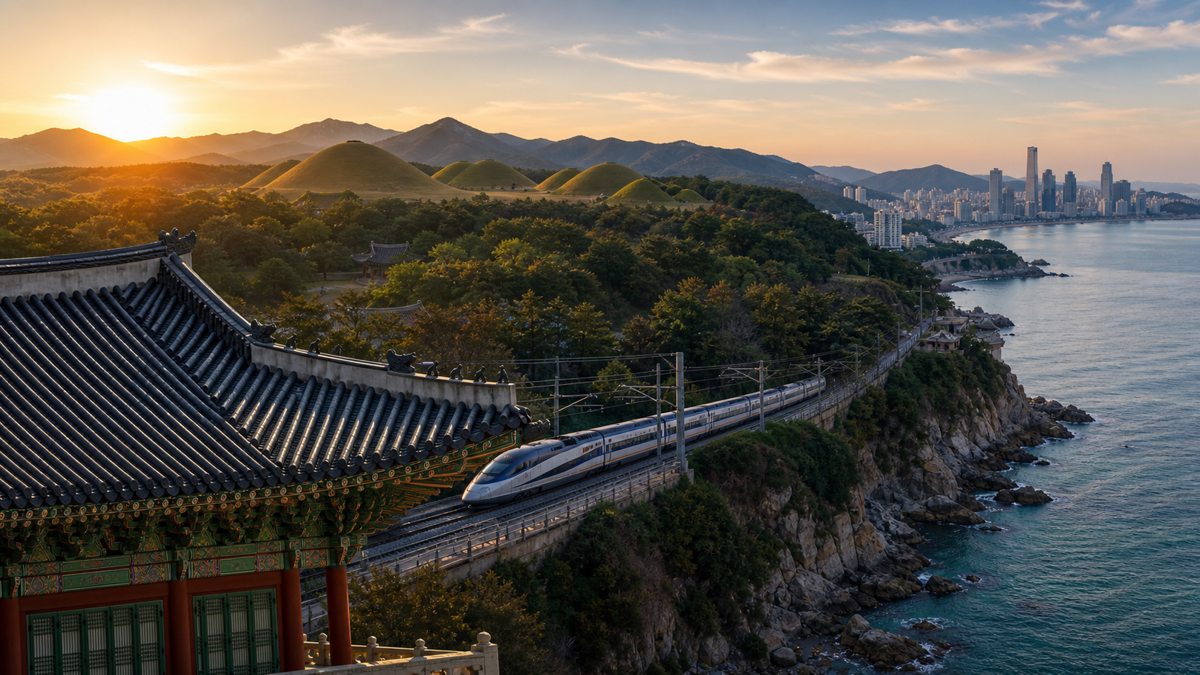
An 8-day Korea itinerary can cover Seoul, Busan, and Gyeongju if you treat the trip as a connected route, not a race. Seoul opens with capital-city energy, Busan adds coastline and food, and Gyeongju gives the journey a compact history chapter before you return toward your departure point.
This route is best for first-time visitors who want more than a Seoul-Busan split but do not have enough time for a full Seoul-Busan-Gyeongju-Jeonju loop. If you are still deciding whether eight days is the right length, compare it with the broader first-trip Korea length guide before booking hotels.
Quick route summary
A practical 8-day structure looks like this:
- Days 1-3: Seoul for arrival, classic sights, neighborhoods, and food.
- Days 4-5: Busan for coast, markets, viewpoints, and a different city rhythm.
- Days 6-7: Gyeongju for royal tombs, temples, hanok streets, and slower evenings.
- Day 8: return toward Seoul or your departure airport, depending on flight timing.
This is active but manageable. It becomes rushed only if you treat every transfer day as a full sightseeing day. Use the Korea trip planning guide alongside this itinerary so your route matches your flights and travel style.
Who this itinerary suits
This route works if you want three moods:
- Seoul: palaces, shopping streets, cafes, museums, nightlife, and dense neighborhoods.
- Busan: sea views, seafood, hillside areas, markets, and a more relaxed urban feel.
- Gyeongju: ancient capital history, temple scenery, royal tombs, and walkable evenings.
It is less ideal if you hate changing hotels, arrive late on Day 1, or depart early on Day 8. In those cases, cut Gyeongju or make the final Seoul night non-negotiable.
Day 1: arrive in Seoul and keep it easy
Do not overbuild the arrival day. Immigration, airport transfer, check-in, and jet lag can absorb more energy than expected. The goal is to land, eat well, and take a first walk near your hotel.
Good arrival-day choices:
- a simple neighborhood dinner;
- a short market, cafe, or shopping-street walk;
- an early night if the flight was long.
Avoid booking a paid activity for the first evening. You need the first night to set up the route, not to prove you can sightsee immediately.
Day 2: classic Seoul sights and old neighborhoods
Use the first full day for Seoul’s classic side. A palace-and-old-neighborhood day works because it gives context before the trip moves south. Combine one historical area with nearby streets, tea houses, galleries, or a market meal.
Keep the day grouped geographically. Seoul is large, and crossing the city repeatedly will make the itinerary feel heavier. A strong formula is one cultural sight, one wandering area, one food stop, and one flexible evening.
Day 3: modern Seoul, shopping, food, or a flexible theme
Day 3 should show a different side of the capital. This might mean shopping and cafes, a museum-heavy day, a river walk, a nightlife district, or a slower food-focused route. The exact neighborhood matters less than the pacing.
Because you travel to Busan the next day, do not make this your latest night. Pack before bed and confirm station access. A calm transfer morning is worth more than one extra late-night stop.
Day 4: Seoul to Busan and a light Busan evening
Once in Busan, check in or store luggage, then explore one compact area.
Where you stay changes the trip:
- Seomyeon: practical for transport, food, and nightlife.
- Nampo: good for markets, harbor atmosphere, and older central Busan.
- Gwangalli: best for a beach-city evening with bridge views.
- Haeundae: useful for a wider beach and resort-like seaside base.
Before booking, compare the best areas to stay in Busan so you do not lose time crossing the city every day. For the evening, choose a market dinner, beach walk, or neighborhood food crawl rather than trying to cover both ends of Busan.
Day 5: a full Busan day with coast and food
Day 5 is your main Busan day, so give it a clear theme. Busan rewards movement, but it is spread out. Choose two main areas instead of four.
A practical day shape:
- start with a seaside walk or viewpoint;
- move to a market or food area for lunch;
- spend the afternoon in one coastal or visually strong neighborhood;
- keep the evening near your hotel or near the beach.
This day should feel different from Seoul: slower by the water, heavier on seafood and street food, and more scenic between neighborhoods.
Day 6: Busan to Gyeongju, then a gentle history evening
Move to Gyeongju on Day 6. The transfer is short enough to make the pairing logical, but you still need a luggage plan. The guide to getting to Gyeongju from Busan can help you decide how to prioritize convenience, station access, and hotel location.
Once in Gyeongju, resist sprinting through every major sight. Use the first afternoon for central Gyeongju: royal tombs, traditional streets, cafes, and an evening walk. Save temples or outlying sights for Day 7.
Day 7: Gyeongju temples, tombs, and the reason you added the stop
Day 7 is the reason Gyeongju belongs in this 8-day route. Use it for the sights that make the city distinct from Seoul and Busan: ancient capital history, temple scenery, royal tomb landscapes, and quiet evening streets.
Gyeongju works best when you leave time to walk and pause. If you are choosing between a packed taxi-style checklist and a slower central-plus-temple day, most first-time visitors will remember the slower version more clearly.
If you are tempted to replace Gyeongju with Jeonju, compare them carefully. The Gyeongju vs Jeonju guide for a first Korea trip explains the difference: Gyeongju is stronger for ancient history and temple landscapes, while Jeonju is stronger for hanok atmosphere and food.
Day 8: return day or final Seoul buffer
Protect Day 8. If your international flight leaves late, you may be able to travel back the same day, but a final Seoul-area night is often safer when flights are early, luggage is heavy, or weather is uncertain.
Think of Day 8 in three possible ways:
- Departure day: travel directly toward the airport if timing is comfortable.
- Buffer day: return to Seoul, eat well, and keep the schedule light.
- Extension day: if you gain an extra night, add it to Seoul rather than creating another city stop.
This final buffer is what keeps the itinerary from feeling rushed.
Should you add Jeonju?
Usually, no. Jeonju is worthwhile, but adding it to an 8-day Seoul-Busan-Gyeongju route creates too many short stays. You would reduce Busan to a quick stop, cut Seoul too tightly, or turn Gyeongju into a pass-through.
Add Jeonju only if hanok atmosphere and food matter more to you than either Busan’s coast or Gyeongju’s ancient-history focus. Otherwise, save it for a longer route.