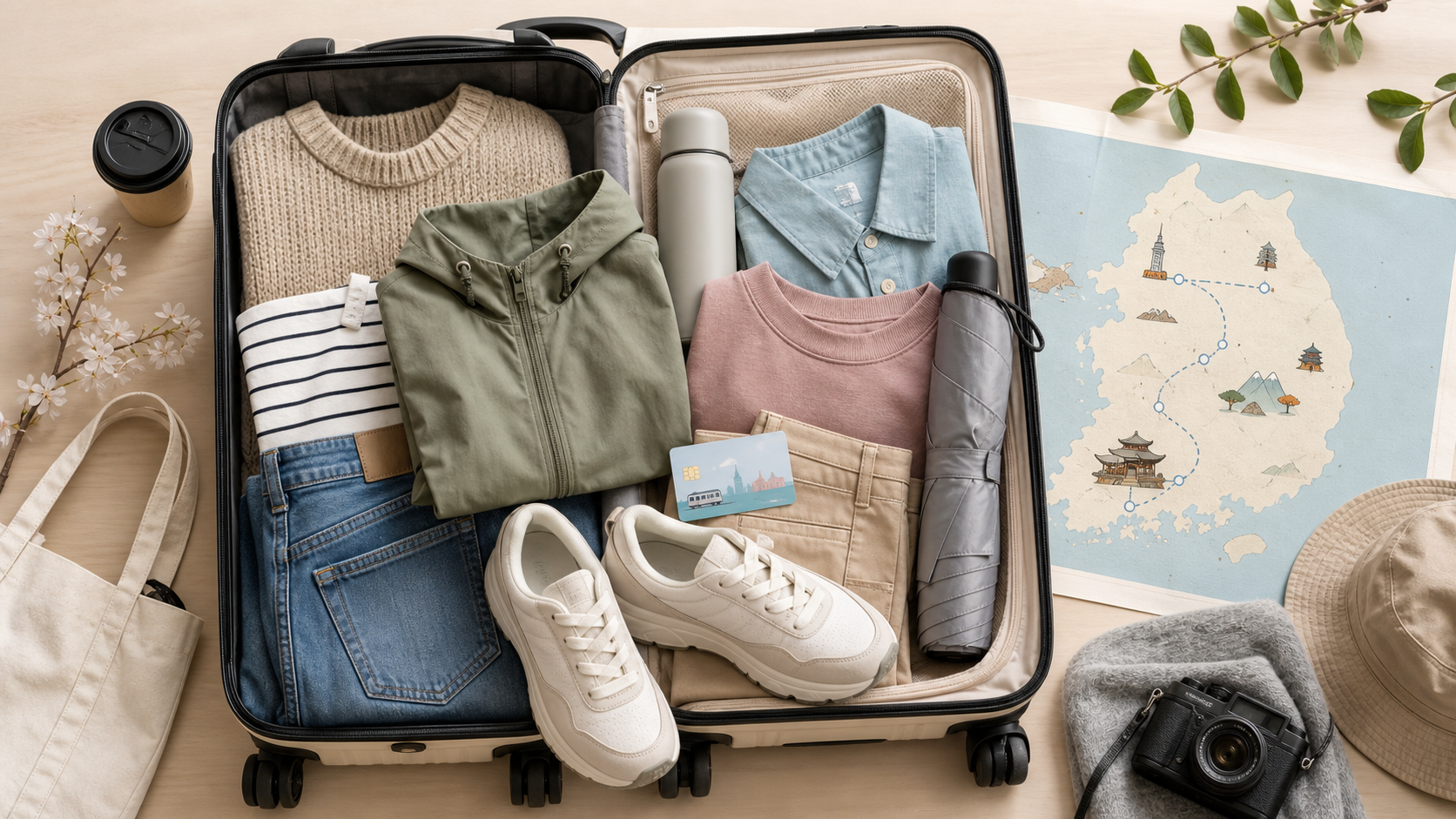
Packing for Korea is easier when you think about how the trip will actually feel on the ground: long walking days, efficient public transport, compact hotel rooms, seasonal weather swings, and possible city changes between Seoul, Busan, Gyeongju, or Jeonju.
For a first trip, the goal is not to pack for every possible scenario. The goal is to bring the things that keep your arrival smooth, your feet comfortable, your phone working, and your clothes suitable for the season. Korea is convenient once you are settled, but the first 24 hours are much easier if your key items are already with you.
If you are still deciding your route and trip length, start with the Korea trip planning guide before finalizing luggage. A Seoul-only trip, a Seoul-plus-Busan trip, and a multi-city route all create slightly different packing needs.
Quick answer packing list
For most first-time visitors to Korea, pack these essentials:
- Comfortable walking shoes that are already broken in.
- Season-appropriate outerwear, not just outfits for photos.
- Layerable clothing for subway stations, cafes, museums, and changing temperatures.
- A small day bag for water, battery pack, umbrella, passport copy, and purchases.
- Portable charger for maps, translation, photos, and transit apps.
- Universal travel adapter and charging cables for your devices.
- Medication and personal health items you rely on at home.
- Basic toiletries for the first night, even if you plan to buy more later.
- Compact umbrella or light rain shell, especially in rainy or changeable months.
- Transit-ready arrival pouch with passport, cards, hotel address, and phone setup.
- Room in your luggage for skincare, snacks, stationery, clothes, or souvenirs.
The most common first-timer packing mistake is bringing too many outfits and not enough practical comfort items. Korea rewards travelers who can walk, move through stations, carry bags up occasional stairs, and adapt to weather.
What to pack for every Korea trip
Some items are useful in Korea no matter when you visit. These should be packed before you start adjusting for season.
Comfortable shoes and socks
Expect more walking than you think. Even if you use subways, buses, taxis, and trains, a normal sightseeing day can include long station corridors, palace grounds, shopping streets, markets, stairways, and neighborhood wandering.
Bring:
- One main pair of comfortable walking shoes.
- A backup pair only if your trip is long or weather is wet.
- Good socks that work for full-day walking.
- Blister patches or foot-care items if you are prone to discomfort.
Avoid making brand-new shoes your main travel pair. Korea is not the place to discover that a stylish pair hurts after two hours.
Layers for indoor and outdoor changes
Korea has strong seasonal differences, but indoor conditions can also vary. You may move from cold streets to warm cafes in winter, or from humid outdoor air to cool indoor air in summer.
Useful layers include:
- Light cardigan, overshirt, or thin fleece for spring and autumn.
- Warm mid-layer for winter.
- Breathable shirts for summer.
- Packable jacket for shoulder seasons.
Layers are more useful than one bulky item because they let you adapt throughout the day.
Phone, charging, and navigation essentials
Your phone will carry your maps, translation, bookings, photos, and transit information. Treat phone power as part of your travel infrastructure.
Pack:
- Portable battery pack.
- Main charging cable plus a spare.
- Wall charger.
- Travel adapter.
- Offline copies or screenshots of your hotel name and address.
- Printed or saved booking confirmations for arrival day.
A phone battery that dies during a transfer is more stressful than forgetting an extra shirt.
Travel documents and payment backup
Keep the most important items easy to reach during arrival and transfers.
Bring:
- Passport.
- Required entry documents for your situation.
- Travel insurance details, if you use insurance.
- At least one backup payment card.
- Emergency contact information.
- A copy or photo of your passport stored separately from the original.
Do not pack all payment cards in one wallet if you can avoid it. Separate backups reduce stress if something is misplaced.
Day bag for sightseeing
A day bag should be comfortable, secure, and small enough for crowded areas. It does not need to be technical or large.
Good day bag contents:
- Phone and portable charger.
- Small umbrella or rain shell.
- Water bottle.
- Tissues or wipes.
- Lip balm and sunscreen as needed.
- Passport copy, not necessarily your original passport unless required for the day.
- Light layer.
- Small shopping tote.
A foldable tote is especially useful in Korea because shopping, convenience stores, and markets can add small items throughout the day.
Seasonal packing differences
Korea’s seasons are distinct. Your packing list should change depending on the month, not just the city.
Spring: layers, light jacket, and flexible shoes
Spring can be pleasant, but early spring and late spring feel different. You may get cool mornings, mild afternoons, wind, rain, or sudden temperature changes.
Pack for spring:
- Light jacket, trench, denim jacket, or packable outer layer.
- Long sleeves and short sleeves for layering.
- Comfortable walking shoes that can handle damp pavements.
- Compact umbrella.
- Light scarf if you get cold easily.
- Allergy items if you usually need them at home.
Spring is popular for outdoor walks, palace visits, and parks, so prioritize comfort over overly delicate outfits.
Summer: breathable clothes and rain readiness
Summer in Korea can feel hot, humid, and wet. You will want breathable clothing and a plan for sudden rain, not heavy layers.
Pack for summer:
- Breathable shirts and lightweight bottoms.
- Quick-drying clothing if your itinerary includes long outdoor days.
- Comfortable sandals or breathable walking shoes.
- Compact umbrella or light rain jacket.
- Hat and sunscreen.
- Small towel or handkerchief.
- Extra socks if your feet get sweaty or wet.
Avoid packing only heavy denim or thick fabrics. They can feel uncomfortable on humid subway rides, market walks, and outdoor sightseeing days.
Autumn: the easiest season for balanced packing
Autumn is often the simplest season to pack for because layering works well. Early autumn may still feel warm, while later autumn can become crisp or cold, especially in the evenings.
Pack for autumn:
- Light to medium jacket.
- Long sleeves and breathable base layers.
- Comfortable walking shoes.
- Optional scarf for later autumn.
- Compact umbrella.
- One warmer layer if traveling late in the season.
Autumn trips often include outdoor scenery, historical sites, and city walking, so pack clothing that looks good but still performs well for long days.
Winter: real cold-weather gear
Winter packing should be practical. If you are coming from a mild climate, do not underestimate cold wind, outdoor waiting time, or long evenings.
Pack for winter:
- Warm coat or insulated jacket.
- Sweaters or fleece layers.
- Thermal base layers if you get cold easily.
- Hat, scarf, and gloves.
- Warm socks.
- Shoes with decent grip.
- Lip balm and moisturizer.
You do not need to pack an entire ski wardrobe for a normal city trip, but you do need enough warmth to enjoy palaces, markets, viewpoints, and night streets without rushing indoors constantly.
Seoul, Busan, Gyeongju, and Jeonju route considerations
Your packing list changes when you leave Seoul. Multi-city travel adds luggage movement, train or bus transfers, and different sightseeing rhythms.
Seoul: walking, shopping, and subway days
Seoul packing should focus on daily mobility. You may spend long days moving between neighborhoods, palaces, cafes, markets, shops, and evening areas.
For Seoul, prioritize:
- Shoes you can wear all day.
- A day bag that works in subway crowds.
- Layering for indoor-outdoor changes.
- Extra luggage space if shopping is part of your plan.
- A neat outfit if you plan nicer dinners or photo-heavy days.
If Seoul is your main base, your luggage strategy can be simpler because you are not moving hotels often. Use the how many days in Seoul guide to judge whether you are packing for a short city break or a deeper Seoul stay.
Busan: coast, hills, and spread-out neighborhoods
Busan adds coastline, sea air, beach walks, markets, and more spread-out movement. It can feel milder than inland areas at times, but wind and route distances still matter.
For Busan, consider:
- Comfortable shoes for hills, viewpoints, and long neighborhood walks.
- Light wind layer for coastal areas.
- Swimwear only if your season and plans justify it.
- A smaller luggage setup if transferring by train from Seoul.
- A day bag suitable for beach, market, and city movement.
If you are deciding where to base yourself, the best areas to stay in Busan guide can help you avoid packing and moving in ways that do not match your neighborhood plan.
Gyeongju: historical sites and outdoor time
Gyeongju often means more outdoor sightseeing: tombs, temples, historical areas, and walking between attractions. Pack for comfort and weather exposure.
For Gyeongju, bring:
- Comfortable walking shoes.
- Sun protection in warm seasons.
- Warm layers in cold seasons because outdoor sites can feel exposed.
- A compact umbrella or rain layer.
- A day bag with water and snacks.
A polished outfit is nice for photos, but avoid shoes or clothes that limit walking.
Jeonju: food streets, hanok areas, and relaxed wandering
Jeonju is often slower than Seoul or Busan, but you may still walk a lot through hanok streets, food areas, and local neighborhoods.
For Jeonju, consider:
- Comfortable shoes for uneven or older streets.
- Flexible waistband or relaxed clothing for food-focused days.
- A light layer for evening wandering.
- Compact luggage if staying in smaller accommodations.
If you are staying in traditional-style accommodation, check room details before packing bulky luggage. Some rooms and entrances may be less convenient for very large bags.
Luggage strategy for a first Korea trip
The best luggage setup depends on how many cities you visit.
Seoul-only trip
A larger suitcase is manageable if you are staying in one hotel and have a straightforward airport transfer. Still, avoid packing it completely full. Seoul is tempting for shopping, skincare, snacks, and clothing.
Good Seoul-only setup:
- One checked suitcase or carry-on, depending on trip length.
- One day bag.
- One foldable tote.
- Space left for purchases.
Seoul plus Busan
A two-city route is still manageable, but you will move through stations and possibly taxis or local transit. Pack lighter than you would for a single-city trip.
Good two-city setup:
- One rolling suitcase you can handle yourself.
- One small personal bag.
- Clothes that mix and match.
- Minimal duplicate shoes.
Seoul, Busan, Gyeongju, or Jeonju route
The more hotel changes you add, the more luggage becomes part of the itinerary. Heavy bags can make a good route feel tiring.
Good multi-city setup:
- Smaller suitcase or backpack-style luggage if you are comfortable with it.
- Packing cubes or simple organizers.
- Limited shoes.
- Laundry plan for longer trips.
- A separate small pouch for transit documents and chargers.
Before finalizing a multi-city route, review the Korea transport and arrival guide so your luggage choices match how you will actually move.
What not to overpack
Korea is convenient, and many items can be bought after arrival. Overpacking creates more problems than it solves, especially on train days and in compact rooms.
Avoid overpacking:
- Too many shoes.
- Heavy formal clothing unless your plans require it.
- Full-size toiletries for every product.
- Bulky towels.
- Excessive snacks.
- Too many “just in case” outfits.
- Large umbrellas if a compact one works.
- Duplicate electronics you will not use.
Also avoid packing only fashion-focused outfits. Korea is stylish, but first-time visitors usually enjoy the trip more when clothes are comfortable enough for real movement.
Arrival-day and transit essentials
Your arrival-day items should be easy to reach without opening your entire suitcase in public.
Pack a small arrival pouch or top-of-bag section with:
- Passport.
- Phone and charger.
- Portable battery.
- Hotel name and address saved offline.
- Airport transfer notes.
- Payment card and some backup payment method.
- Essential medication.
- Pen if you like having one for forms or notes.
- Light layer for the ride into the city.
- Basic toiletries if arriving before check-in.
On transit days between cities, keep these accessible:
- Train or bus booking details.
- Accommodation address.
- Charger and battery pack.
- Water.
- Small snack.
- Umbrella or weather layer.
- Valuables.
Do not bury your charger, passport, or hotel address at the bottom of a checked suitcase. Transit is much easier when key items stay with you.
Packing for different traveler styles
Solo travelers
Solo travelers should prioritize self-sufficiency and easy movement. Pack lighter than you think, especially if changing cities.
Useful priorities:
- One manageable bag.
- Secure day bag.
- Backup payment card stored separately.
- Phone power redundancy.
- Simple outfit system.
Couples
Couples can share some items, but should not put every essential in one bag.
Useful priorities:
- Share adapters and toiletries where practical.
- Keep individual medication separate.
- Split backup cards and documents.
- Avoid both people overpacking shoes and outerwear.
Families
Families should pack around fatigue and transitions. Korea is family-friendly in many ways, but stations, crowds, and hotel moves are easier with fewer loose items.
Useful priorities:
- Snacks for arrival and train days.
- Layers for children.
- Small entertainment items.
- Medication and comfort items from home.
- Luggage each adult can realistically manage.
Final packing framework
Use this simple framework before closing your bag:
- Check your month first. Korea packing changes sharply between summer humidity, winter cold, and shoulder-season layering.
- Check your route second. Seoul-only packing can be more generous; multi-city packing should be lighter.
- Build around shoes and outerwear. These affect comfort more than extra outfits.
- Protect your phone plan. Chargers, battery pack, and saved addresses matter every day.
- Leave space. Korea is an easy place to buy things, and first-time visitors often return with more than expected.
The best Korea packing list is practical, seasonal, and route-aware. If you can walk comfortably, stay charged, adapt to weather, and move your own luggage, you are prepared for most first-trip situations.
Two checks before you finish packing
Entry-document caveat: passport validity, visa/K-ETA requirements, arrival forms, and airline document checks can vary by nationality, travel purpose, and policy timing. Confirm current requirements through your airline and official government guidance before departure.
Power and weather caveat: Korea commonly uses 220V power and Type C/F-style plugs, but you should confirm your own device voltage compatibility before using an adapter. Also recheck the forecast about 48 hours before departure, and plan laundry if your route is multi-city or longer than one week.