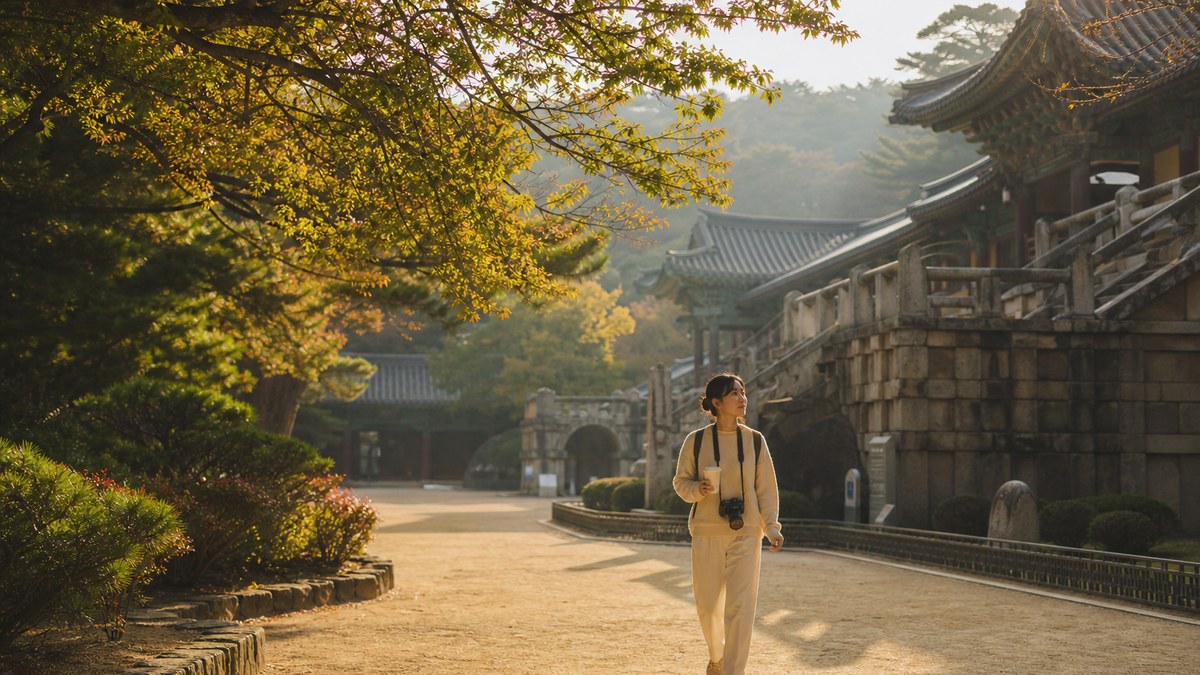
For most first-time visitors, 3 days in Gyeongju is not the default best answer.
That matters, because a lot of travelers assume more time automatically means a better trip.
In Gyeongju, that is only true when the city is playing a specific role.
For many people, 2 days is the sweet spot.
It gives the historic core, one major heritage anchor, and enough evening rhythm to make the city feel distinct without over-expanding it inside a wider Korea route.
But for some travelers, 3 days in Gyeongju is absolutely worth it.
It can create a slower, more atmospheric, more deliberate version of the stop — one that feels less like a side branch and more like a meaningful cultural segment of the trip.
Quick Answer: Is 3 Days Too Much for Gyeongju?
Not always.
3 days in Gyeongju can be worth it if:
- Gyeongju is one of the emotional priorities of the trip
- you want a slower cultural pace rather than a compressed highlight sweep
- your overall Korea route has enough room to support a deeper stop
But if the whole trip is short, or if Gyeongju is only meant to be a selective add-on, 3 days is usually more than you need.
If you are still deciding the basic time allocation, start with How Many Days in Gyeongju Do You Really Need?.
When 3 Days in Gyeongju Is Actually Worth It
Three days works best when you want Gyeongju to do more than provide one historical contrast.
It is strongest for travelers who want:
- a slower trip rhythm
- more than one meaningful heritage day without constant hurry
- time for evenings that feel part of the destination
- more breathing room between major anchors and city atmosphere
In other words, 3 days makes sense when Gyeongju is not just being inserted into the route. It is being chosen with intention.
Day 1: Build the Core Identity of the Trip
Use the first day to anchor the trip in central Gyeongju and the city’s historic atmosphere.
This should be the day that establishes why Gyeongju feels different from Seoul and Busan.
That usually means:
- historic-core walking
- slower orientation to the city
- one clean central rhythm instead of aggressive landmark stacking
The point of Day 1 is not to prove coverage.
It is to let the city become legible.
Day 2: Add the Main Heritage Weight
Day 2 should carry the largest heritage anchor in the trip.
This is where a 3-day plan begins to separate itself from a 1-day or 2-day visit.
You have enough room to give the city a more substantial second layer without making the whole route feel compressed.
The advantage of three days is not only more sights.
It is the ability to move with less mental pressure.
Day 3: Use the Extra Time Carefully
This is where many 3-day plans go wrong.
The third day should not exist just because the calendar had space.
It should be used for one of these:
- a slower heritage continuation
- a more relaxed city atmosphere day
- a selective final layer that would feel forced in a shorter trip
What it should not become is a bucket for random leftover items.
A good third day gives the city deeper emotional payoff.
A weak third day makes the branch feel diluted.
Who Should Not Give Gyeongju 3 Days
Three days is usually too much if:
- the overall Korea trip is short
- Seoul and Busan already feel underfunded in time
- you only want Gyeongju as a cultural taste, not a deeper stop
- you are trying to solve indecision by adding more time instead of clarifying the route
If that sounds like your situation, read 1-Day Gyeongju Itinerary for First-Time Visitors and 2-Day Gyeongju Itinerary for First-Time Visitors.
How 3 Days Changes the Wider Korea Route
This is the real business question behind the page.
Adding 3 days to Gyeongju means the city is no longer a lightweight add-on.
It starts changing the shape of the whole Korea route.
That can be excellent if:
- your trip is long enough
- cultural texture matters more than constant city-switching
- you want one calmer stop to balance a more urban route
But it can be harmful if it steals too much time from your main anchors.
Common Mistakes
1. Treating 3 days as automatically more “complete”
A longer stay is only better when the route can absorb it.
2. Using Day 3 as a dumping ground
A third day should deepen the destination, not collect leftovers.
3. Ignoring season and pace
A slower Gyeongju trip feels very different depending on weather and atmosphere. If timing matters to you, that should shape the plan too.
Final Recommendation
3 days in Gyeongju is worth it only when you want the city to play a bigger cultural role in the trip.
If you mainly want one strong heritage stop, 2 days is usually better.
But if you want Gyeongju to feel slower, more atmospheric, and more emotionally complete, 3 days can be one of the strongest choices in the route.
The key is not adding time by default.
The key is making sure the extra day changes the trip for the better.
Related Guides
- Gyeongju for First-Time Visitors: Best Things to Do, Where to Stay, and How Many Days You Need
- How Many Days in Gyeongju Do You Really Need? A Practical 1-, 2-, and 3-Day Guide
- 1-Day Gyeongju Itinerary for First-Time Visitors: What to Prioritize and What to Skip
- 2-Day Gyeongju Itinerary for First-Time Visitors: A Practical Plan Without Overpacking
FAQ
Is 3 days too much for Gyeongju?
Not always. It can be worth it when Gyeongju is a deliberate cultural priority, but for many first-time visitors 2 days is still the stronger default.
Is 2 days or 3 days better in Gyeongju?
For most first-time visitors, 2 days is better. Three days is best for travelers who want a slower and deeper version of the stop.
Who should spend 3 days in Gyeongju?
Travelers with a longer route, stronger cultural interest, and enough trip space to let Gyeongju carry more weight.
When should I not give Gyeongju 3 days?
Avoid 3 days when your overall Korea trip is short or when that extra time would weaken Seoul or Busan too much.