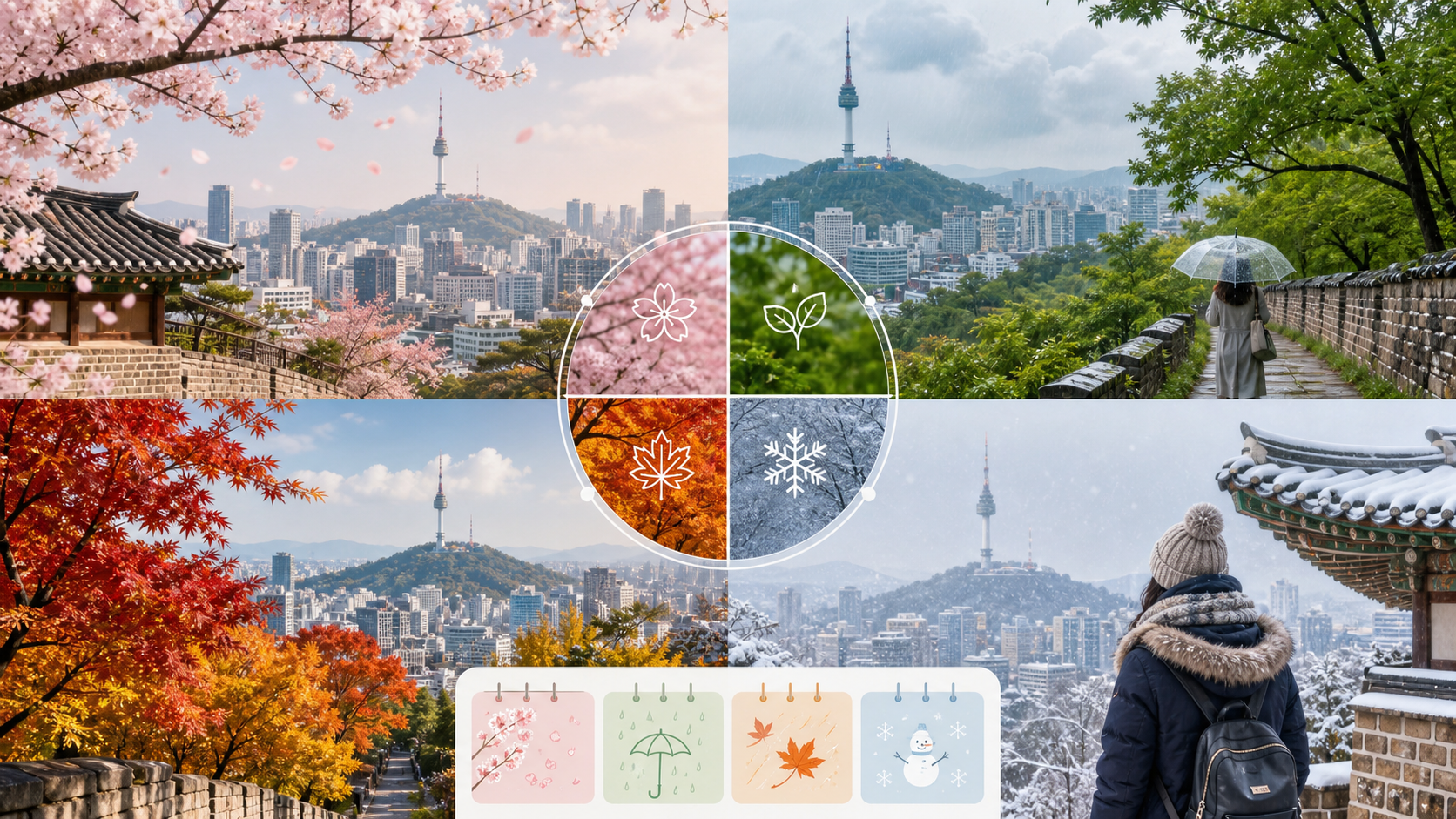
Korea is a four-season destination, and the month you choose can change the entire feel of a first trip. Spring can be beautiful but changeable. Summer can be hot, humid, and rainy. Autumn is comfortable and popular for outdoor travel. Winter is cold but manageable if you pack properly and plan your days well.
For first-time visitors, weather matters because Korea trips usually involve a lot of walking, public transport, outdoor markets, palace grounds, coastal areas, and hotel-to-station movement. A good itinerary is not only about where to go; it is also about how each month affects energy, clothing, luggage, and route choices.
If you are still building the overall trip, use this guide alongside the Korea trip planning guide so your travel month matches your route, pace, and comfort level.
Quick monthly summary
Here is the simple version for first-time planning:
- January: Very cold; good for winter atmosphere, indoor planning, cafes, museums, and travelers comfortable with cold weather.
- February: Still cold; slightly closer to spring but winter clothing is still important.
- March: Transition month; early March can feel wintery, late March begins to feel more springlike.
- April: Classic spring month; popular for flowers, outdoor walks, and first-time sightseeing.
- May: Mild to warm; one of the easier months for walking-heavy itineraries.
- June: Warmer and more humid; start preparing for summer conditions and possible rain.
- July: Hot, humid, and often wet; plan slower days and indoor backups.
- August: Hot and humid; coastal stops can be appealing, but sightseeing requires pacing.
- September: Late-summer to early-autumn transition; can still feel warm and humid early in the month.
- October: Comfortable autumn weather; excellent for city walking, historical sites, and multi-city routes.
- November: Cooler autumn into early winter; good for layers and quieter outdoor sightseeing.
- December: Cold; festive city atmosphere, winter clothes, and more indoor-focused planning.
No month is automatically wrong, but each one requires a different packing and itinerary approach.
Korea seasons overview
Spring: March to May
Spring is one of Korea’s most popular travel periods because temperatures become more comfortable and outdoor sightseeing feels enjoyable. It is a good season for palaces, parks, cafes, neighborhoods, day trips, and historical cities.
Spring planning notes:
- Weather can change quickly, especially in March.
- April and May are easier for walking than early spring.
- Popular flower periods can make certain areas busier.
- Layers are more useful than one heavy item.
- Rain is possible, so bring a compact umbrella or light rain layer.
Spring is a strong choice for first-time visitors who want a balanced Seoul-focused or Seoul-plus-Busan trip.
Summer: June to August
Summer can be challenging for travelers who dislike heat and humidity. It can also be enjoyable if you plan realistically: slower mornings, breaks in cafes or museums, lighter clothing, and fewer packed outdoor days.
Summer planning notes:
- Humidity can make walking feel more tiring.
- Rain can affect outdoor plans.
- Indoor attractions and food-focused days become more valuable.
- Coastal areas like Busan can be appealing, but they are not a complete escape from humidity.
- Quick-drying clothes and breathable shoes help.
Summer does not mean you should avoid Korea, but it does mean you should avoid overloading the itinerary.
Autumn: September to November
Autumn is often the easiest season for first-time visitors. The weather becomes more comfortable, outdoor sightseeing is pleasant, and multi-city travel feels more manageable.
Autumn planning notes:
- September can still feel warm or humid, especially early in the month.
- October is one of the most comfortable months for walking-heavy trips.
- November becomes cooler, especially in mornings and evenings.
- Layers are essential.
- Popular foliage areas may be busier at peak times.
Autumn works well for Seoul, Busan, Gyeongju, Jeonju, and routes that include several cities.
Winter: December to February
Winter in Korea is cold, especially for travelers from warm climates. With the right clothing, it can still be a rewarding time for city travel, food, cafes, markets, museums, and seasonal atmosphere.
Winter planning notes:
- Warm outerwear is important.
- Outdoor sightseeing should be broken into shorter blocks.
- Indoor meals, cafes, shopping streets, and museums help balance the day.
- Wind can make exposed areas feel colder.
- Footwear should be warm and comfortable.
Winter is best for travelers who enjoy cold-weather city trips and do not mind adjusting the pace.
Month-by-month planning notes
January
January is deep winter. Expect cold days, cold evenings, and a need for real winter clothing. A first-time trip can still work well if you plan shorter outdoor blocks and give yourself warm indoor breaks.
Good January plans:
- Palaces and outdoor sites in shorter visits.
- Museums, cafes, shopping areas, and food markets.
- Warm meals and slower evenings.
- Seoul-focused itineraries with limited hotel changes.
Pack a warm coat, hat, gloves, scarf, warm socks, and shoes with decent grip.
February
February remains cold, though the feeling of late winter may vary by year. It is not a light-jacket month for most visitors. If you travel in February, pack similarly to January and avoid assuming spring has arrived.
Good February plans:
- Seoul city exploring with indoor breaks.
- Food-focused days.
- Cultural sites when weather is manageable.
- Fewer early mornings if cold affects your energy.
Winter clothing is still the priority.
March
March is a transition month. Early March can feel cold, while late March may feel more like spring. This makes packing trickier than it looks.
Good March plans:
- Layered Seoul sightseeing.
- Palaces, neighborhoods, and cafes.
- Flexible outdoor plans.
- A route that does not depend on perfect weather every day.
Pack layers, a medium jacket, and comfortable shoes. Do not pack as if it is guaranteed to be warm.
April
April is a classic spring travel month. It is often a strong choice for first-time visitors because outdoor walking becomes more enjoyable and sightseeing days feel easier.
Good April plans:
- Seoul palaces, parks, neighborhoods, and markets.
- Busan coastal walks.
- Gyeongju historical sites.
- Jeonju food and hanok-area wandering.
Bring a light jacket, layers, and an umbrella. Popular spring areas can be busy, so keep your itinerary flexible.
May
May is one of the easiest months for first-time visitors. It is generally more comfortable for walking than summer, and you can plan fuller outdoor days without the same cold-weather limitations as winter.
Good May plans:
- Seoul plus Busan routes.
- Historical stops such as Gyeongju.
- Food and culture stops such as Jeonju.
- Longer walking days with cafe breaks.
Pack light layers, breathable shirts, comfortable shoes, and sun protection.
June
June begins the shift toward summer. It can feel warm and increasingly humid, and rain planning becomes more important.
Good June plans:
- Morning outdoor sightseeing.
- Indoor afternoon backups.
- Food markets, cafes, museums, and shopping.
- Busan if you want a coastal contrast, with realistic expectations about humidity.
Pack breathable clothing, an umbrella or rain shell, and shoes that can handle damp conditions.
July
July is hot, humid, and often wet. A first Korea trip can still be enjoyable, but the itinerary should be less aggressive than a spring or autumn version.
Good July plans:
- Fewer outdoor sites per day.
- More indoor attractions and planned breaks.
- Hotel areas that reduce long daily transfers.
- Evening walks when conditions feel better.
Avoid building a trip that requires full-day outdoor walking every day. Choose convenience over squeezing in extra neighborhoods.
August
August continues the hot and humid pattern. It can be tiring if you are not used to this kind of weather, so plan for comfort and recovery time.
Good August plans:
- Coastal time in Busan if it fits your route.
- Seoul neighborhoods with indoor stops.
- Shopping, cafes, museums, and food-focused evenings.
- Later starts or longer breaks if heat affects you.
Pack light, breathable clothes and avoid heavy fabrics. Keep a water and shade strategy for outdoor days.
September
September is a transition month. Early September can still feel like summer, while later September may become more comfortable. Do not assume the entire month is crisp autumn.
Good September plans:
- Seoul plus Busan with flexible pacing.
- Outdoor sightseeing earlier or later in the day.
- A gradual shift toward more walking-heavy days later in the month.
- Rain backup plans.
Pack breathable clothes plus a light layer. A compact umbrella remains useful.
October
October is one of the best months for first-time visitors who want comfortable city walking and multi-city travel. It is a strong month for Seoul, Busan, Gyeongju, and Jeonju.
Good October plans:
- Seoul neighborhoods, palaces, and markets.
- Busan coastal areas and viewpoints.
- Gyeongju historical sites.
- Jeonju food and cultural wandering.
Pack layers, a light to medium jacket, and comfortable walking shoes. October is a good month to include more outdoor time, but still avoid overpacking the schedule.
November
November moves from autumn toward winter. Early November may still be good for outdoor wandering, while late November can feel much colder.
Good November plans:
- Seoul city exploring with warmer layers.
- Gyeongju or Jeonju if you enjoy cooler outdoor walks.
- Food, cafes, markets, and cultural stops.
- Shorter evenings outdoors if temperatures drop.
Pack a warm layer, jacket, scarf if needed, and shoes suitable for cooler days.
December
December is winter. City streets, lights, warm meals, and indoor stops can make travel enjoyable, but outdoor sightseeing requires proper clothing.
Good December plans:
- Seoul-focused trip with indoor breaks.
- Markets, shopping areas, cafes, museums, and food streets.
- Busan if you want a city contrast, while still packing for cold conditions.
- Shorter outdoor sightseeing blocks.
Pack a warm coat, gloves, scarf, hat, warm socks, and moisturizer or lip balm if cold air affects your skin.
Best months by traveler type
Best months for first-time city walkers
If your ideal trip includes palaces, shopping streets, cafes, markets, subway exploration, and full days in Seoul, the easiest months are usually spring and autumn, especially April, May, October, and early-to-mid November.
These months make it easier to walk more without constant cold or humidity management. If you are planning a Seoul-heavy trip, compare your schedule with the how many days in Seoul guide so you do not overfill each day.
Best months for multi-city routes
For Seoul plus Busan, Gyeongju, or Jeonju, comfortable weather matters because hotel changes and station transfers add physical effort.
Good multi-city months often include:
- April and May.
- October and early November.
- Late March or September if you are comfortable with more variability.
These periods are generally easier for walking, carrying luggage, and enjoying outdoor historical or coastal areas.
Best months for heat-tolerant travelers
If you do not mind humidity and want a summer trip, June, July, August, and early September can work with the right expectations.
Plan around:
- Lighter clothing.
- More hydration breaks.
- Fewer outdoor stops per day.
- Hotels in convenient areas.
- Indoor options during rain or strong heat.
Summer travelers should prioritize hotel location more than travelers in mild seasons because long transfers feel harder in humid weather.
Best months for cold-weather travelers
If you enjoy winter city trips, December, January, and February can be appealing. You may find winter atmosphere, warm food, cafes, shopping, and indoor cultural stops rewarding.
Plan around:
- Proper winter clothing.
- Shorter outdoor sightseeing blocks.
- Less ambitious early mornings.
- Warm indoor breaks.
- Extra care with footwear and exposed areas.
Winter is less forgiving if you pack poorly, but it is manageable with the right layers.
Weather impact on Seoul, Busan, Gyeongju, and Jeonju routes
Seoul
Seoul is workable in every month, but the daily rhythm changes by season. In spring and autumn, you can comfortably build walking-heavy days. In summer, you should add indoor breaks. In winter, you should group outdoor sights and warm-up stops logically.
Weather-sensitive Seoul planning tips:
- Choose a convenient base when traveling in extreme heat or cold.
- Avoid crossing the city too many times in one day.
- Keep rainy-day options near your planned neighborhoods.
- Build palace and market visits around the most comfortable part of the day.
Busan
Busan adds coastal weather, spread-out neighborhoods, and longer cross-city movement. It is not just “Seoul but warmer.” Wind, rain, humidity, and neighborhood distance can affect your comfort.
Weather-sensitive Busan planning tips:
- Choose your base carefully to reduce unnecessary travel.
- Keep coastal walks flexible in wet or windy weather.
- Use indoor markets, cafes, and shopping areas as backups.
- Pack a light wind layer in cooler seasons.
If Busan is part of your first trip, review the best areas to stay in Busan guide before booking. The right area matters more when weather makes long transfers tiring.
Gyeongju
Gyeongju is more exposed to outdoor sightseeing than many first-timers expect. Temples, tomb areas, historical zones, and scenic walks are best when the weather supports being outside.
Weather-sensitive Gyeongju planning tips:
- Spring and autumn are especially comfortable for historical sightseeing.
- Summer requires shade, hydration, and a slower pace.
- Winter requires warm layers for open-air sites.
- Rain can change how much you enjoy outdoor walking.
If you are staying overnight, use the where to stay in Gyeongju guide to keep your base practical for the season.
Jeonju
Jeonju is often about food, hanok streets, traditional atmosphere, and relaxed wandering. Weather affects how long you want to linger outdoors.
Weather-sensitive Jeonju planning tips:
- Spring and autumn are comfortable for walking and food stops.
- Summer heat can make a slower pace important.
- Winter can still work well if you plan warm meals and indoor breaks.
- Rain-friendly footwear helps on wandering days.
For overnight planning, the where to stay in Jeonju guide can help you choose a base that reduces unnecessary walking with luggage.
Packing implications
Weather should shape your packing more than the number of attractions on your itinerary.
If visiting in spring
Pack:
- Light to medium jacket.
- Layerable tops.
- Comfortable shoes.
- Compact umbrella.
- Light scarf if you get cold easily.
Spring packing should prepare for changeable days, not just mild afternoons.
If visiting in summer
Pack:
- Breathable shirts.
- Lightweight bottoms.
- Rain protection.
- Comfortable shoes or sandals suitable for walking.
- Sun protection.
- Extra socks.
Summer packing should focus on heat, humidity, rain, and quick comfort resets.
If visiting in autumn
Pack:
- Light jacket for early autumn or warmer jacket for late autumn.
- Long sleeves.
- Comfortable walking shoes.
- Optional scarf.
- Umbrella.
Autumn is good for outfit flexibility, but evenings can be cooler than expected.
If visiting in winter
Pack:
- Warm coat.
- Sweaters or fleece.
- Thermal layers if you get cold easily.
- Gloves, scarf, and hat.
- Warm socks.
- Shoes with decent grip.
- Lip balm and moisturizer.
Winter packing should be practical first. Stylish clothing is fine, but not if it leaves you too cold to enjoy the day.
How weather should change your itinerary pace
Weather affects how much you should schedule each day.
Use this simple pacing logic:
- Mild spring or autumn day: two main sightseeing areas plus meals and cafes can be comfortable.
- Hot and humid summer day: one main outdoor area, one indoor backup, and a flexible evening may be better.
- Cold winter day: group nearby sights, add warm breaks, and avoid long outdoor waits.
- Rainy day: choose neighborhoods with indoor food, shopping, cafes, and transport access.
First-time visitors often overestimate how much they can do in uncomfortable weather. A slightly slower itinerary usually feels better than a perfect plan that ignores the season.
Final planning advice
Choose your Korea travel month based on the trip you actually want:
- Pick April, May, October, or early November if you want the easiest walking weather.
- Pick June to August only if you are ready for heat, humidity, rain planning, and a slower pace.
- Pick December to February if you enjoy winter city travel and will pack proper cold-weather gear.
- Treat March and September as transition months that need flexible packing.
For most first-time visitors, the best weather strategy is simple: match the season to your route. Seoul can work year-round, but Busan, Gyeongju, and Jeonju are more enjoyable when the weather supports the kind of outdoor time you expect. Build flexibility into your days, pack for the month rather than the fantasy version of the trip, and choose hotel areas that reduce unnecessary travel in extreme weather.
Quick weather caveat before you choose dates
Weather caveat: Korea weather varies by year, region, and short-term systems. Rainy-season timing, heat waves, typhoons, cherry blossoms, foliage, snow, and air quality can shift, so check the Korea Meteorological Administration or current forecasts before final packing and route decisions.
Best overall first-trip months: April, May, October, and early November are usually the easiest months for first-time visitors because temperatures are more comfortable and outdoor sightseeing is simpler than in peak summer or deep winter.