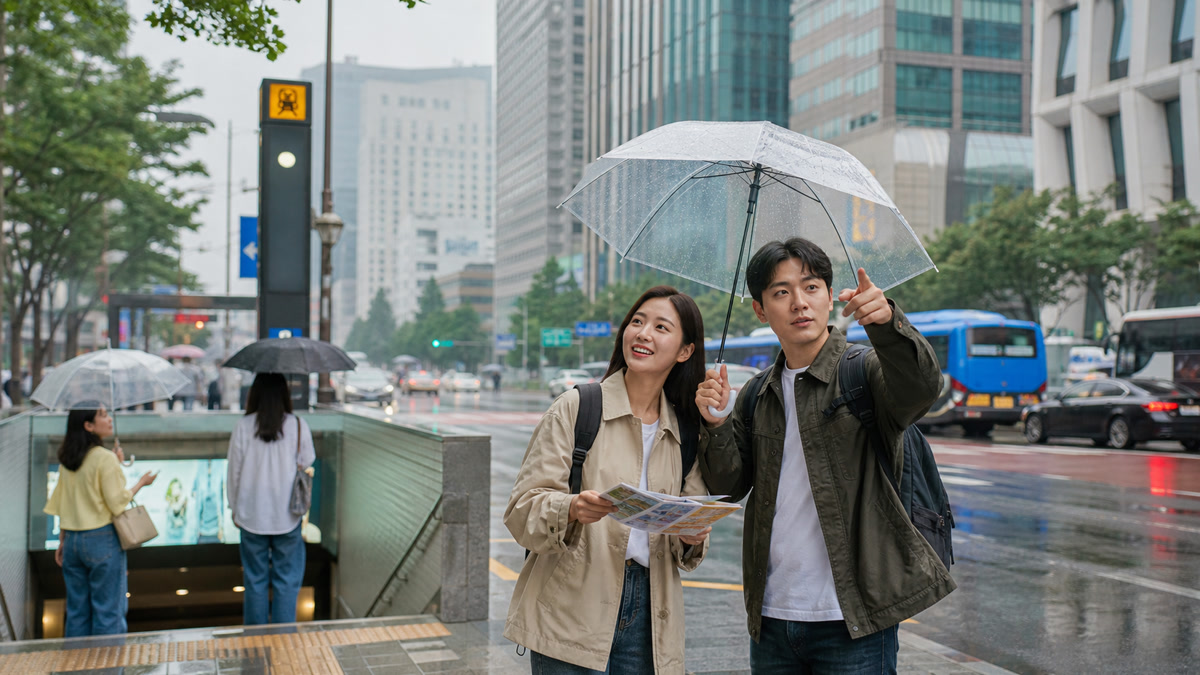
Seoul Rainy-Day Itinerary for First-Time Visitors
Source/date caveat: Weather, attraction hours, river operations, and event programs can change quickly. This guide was prepared on 2026-07-11 using public tourism/weather patterns from official Seoul tourism pages and should be checked against same-day forecasts and attraction websites before booking fixed-time tickets.
Fast decision box
| Traveler situation | Best rainy-day move in Seoul |
|---|---|
| Light rain, short showers, good shoes | Keep palaces, markets, and neighborhood walking, but add one indoor backup nearby. |
| Heavy rain or thunder forecast | Build the day around subway-connected indoor areas such as museums, malls, cafés, department stores, or underground shopping. |
| First full day in Korea | Avoid long cross-city transfers; choose one base area and protect energy after the flight. |
| Shopping or beauty focus | Use Myeongdong, department stores, COEX-style indoor time, or underground malls, then manage luggage before dinner. |
| Family or jet-lagged travelers | Prioritize short hops, reserved seats where possible, toilets, cafés, and hotel proximity over a packed landmark checklist. |
Rain in Seoul changes the cost of a mistake. A dry-day itinerary can survive four or five outdoor stops. A rainy-day itinerary works better when you reduce transfers, stay near subway exits, and keep one flexible indoor block between meals and headline sights.
Should you change your Seoul plan because of rain?
Do not cancel the day automatically. Seoul is one of the easier big cities for rain because the subway network, underground passages, department stores, cafés, museums, and shopping districts give you practical shelter. The real problem is not rain itself. The problem is booking a route that forces you to walk long exposed distances, queue outdoors, or cross the city every two hours.
Use this simple rule:
- Light rain: keep the main plan, shorten outdoor walks, and add an indoor backup.
- Steady heavy rain: switch to a neighborhood-based indoor day.
- Wind, lightning, flooding alerts, or transport disruption: stop optimizing sightseeing and protect safety, meals, and hotel return time.
If you are still choosing travel dates, pair this article with the Korea weather-by-month guide. If you are already in Seoul, check the same-day forecast before buying non-refundable attraction or tour tickets.
Who should add a rainy-day plan?
Add a proper rainy-day plan if you are:
- visiting Korea in summer monsoon season or shoulder seasons with unstable forecasts;
- traveling with children, older parents, or heavy luggage;
- staying only three or four nights in Seoul;
- planning outdoor-heavy days around palaces, Han River, markets, or long photo walks;
- using Seoul as the first stop after a long international flight.
A rainy-day plan is especially useful for first-time visitors because it prevents the common mistake of trying to save every famous sight in bad conditions. Sometimes the profitable travel decision is to do fewer things, enjoy them properly, and keep the next day clean.
Who can skip a separate rainy-day plan?
You can keep planning simple if:
- your Seoul stay is long enough to move outdoor sights to another day;
- your hotel is directly connected to a subway station or major indoor complex;
- your priority is food, cafés, shopping, or museums rather than outdoor photography;
- you are comfortable changing plans on the day using Korean map and transit apps.
Even then, keep a small backup list. Rain becomes expensive when every alternative requires new research at the station while your phone battery is dropping.
A practical one-day rainy Seoul itinerary
Morning: choose one indoor anchor, not three scattered stops
Start with one major indoor or semi-indoor anchor near your hotel. Good formats include a museum, department store area, underground shopping street, large mall, or café-heavy district. The point is not to hide indoors all day. The point is to begin somewhere that keeps the first decision easy.
If you are staying in Myeongdong, City Hall, Jongno, or Insadong, it is usually easier to use central Seoul museums, palaces during lighter rain, cafés, and shopping streets instead of crossing to the far southeast immediately. If you are staying in Gangnam, Jamsil, or COEX-side areas, keep the day on that side and reduce river crossings.
Lunch: eat near the anchor
Rain makes restaurant detours feel longer. Choose lunch within one or two subway stops of the morning area. Avoid fragile food-only itineraries that require a famous stall or exact restaurant to be open. Markets and malls can work well, but do not build the whole day around one vendor.
For market-style food, plan cash/card flexibility and expect crowds. For mall or department-store food courts, check closing times and last orders rather than assuming every restaurant keeps the same hours.
Afternoon: use a subway-connected shopping, culture, or café block
The best rainy afternoon is usually a block of related activities in one district:
- shopping plus tax-refund errands;
- museum plus café;
- bookstore, mall, and dinner;
- beauty shopping plus luggage drop at the hotel;
- indoor attraction plus nearby meal.
This is where Seoul performs strongly for travelers. You can still have a good day without pretending that a wet palace, a river walk, and three outdoor neighborhoods will feel the same as a dry itinerary.
Evening: keep one flexible option
Evening rain is where first-time travelers often overcommit. If the forecast improves, you can add a night view, short market walk, or riverside stop. If rain stays heavy, keep dinner and one indoor district as the win.
Do not buy fixed-time evening tickets too early unless the attraction is mostly indoors and easy to reach from your base. If the plan includes the Han River, rooftop views, outdoor markets, or long photo walks, leave them flexible.
Best Seoul bases for rainy-day resilience
Your hotel base matters more when weather is unstable. The best rainy-day bases are not just famous areas. They are places where you can eat, shop, use the subway, and return to the hotel without exhausting transfers.
| Base area | Rainy-day advantage | Watch-out |
|---|---|---|
| Myeongdong / City Hall | Central, shopping, cafés, easy subway access, useful for first-timers. | Can feel crowded and wet at street level. |
| Hongdae | Cafés, shops, nightlife, airport access via AREX line. | Some plans involve outdoor walking between exits and alleys. |
| Gangnam | Indoor dining, cafés, shopping, strong subway coverage. | Not ideal if every must-see is north of the river. |
| Jamsil | Large indoor mall/attraction logic and good family convenience. | Farther from some central historic sights. |
| Jongno / Insadong | Good for culture, palaces, markets, and traditional streets. | Outdoor charm drops in heavy rain; plan indoor backups. |
If you have not booked accommodation yet, choose a base with multiple bad-weather options nearby. If your hotel is already fixed, do not fight the city. Build the rainy day around your side of Seoul.
What to book, delay, or keep flexible
Book carefully
Book indoor attractions, performances, classes, or timed exhibitions only after checking the same-day weather and route. Rain can slow transfers and make taxi demand higher, especially around commute hours.
Delay when possible
Delay river cruises, rooftop viewpoints, night walks, and outdoor-heavy markets until you know visibility and wind conditions. Some experiences are technically possible in rain but not worth the time cost for a short first trip.
Keep flexible
Keep cafés, shopping districts, museums, department stores, bookstores, and neighborhood meals flexible. These are the best rainy-day fillers because they can expand or shrink depending on the weather.
Apps and payment checks for a rainy Seoul day
Rain punishes weak phone setup. Before leaving the hotel, check:
- your Korean map/transit app is installed and working;
- your eSIM or pocket WiFi has enough battery/data;
- your payment card and some backup cash are available;
- your hotel address is saved in Korean and English;
- your portable charger is packed;
- your shoes and bag can handle wet pavement.
Do not rely only on taxis. Rain can increase wait times and prices, and short subway hops may be more reliable. The best rainy-day plan is usually subway-first, taxi-optional.
Common rainy-day mistakes in Seoul
- Keeping a dry-day route unchanged. Four outdoor districts in rain become tiring fast.
- Crossing the city for one indoor attraction. Build around clusters, not isolated pins.
- Forgetting luggage timing. Wet streets plus suitcases can ruin arrival or checkout day.
- Booking river or rooftop plans too early. Visibility and wind matter.
- Ignoring hotel base logic. A rainy-day plan should start from where you sleep.
- Assuming every official page is current. Always verify hours and notices before fixed plans.
FAQ
Is Seoul still worth visiting during rainy season?
Yes, if you plan realistically. Seoul has enough indoor culture, shopping, food, cafés, and transit-connected neighborhoods to keep a first trip worthwhile. The main adjustment is reducing outdoor transfers and keeping major outdoor sights flexible.
What is the best area to stay in Seoul when rain is likely?
For most first-time visitors, Myeongdong/City Hall, Hongdae, Gangnam, Jamsil, and Jongno/Insadong can all work. The best choice depends on your itinerary. Choose the area that gives you the most useful indoor backups near your hotel, not just the area with the most famous name.
Should I still visit palaces in the rain?
Light rain can be atmospheric if you have good shoes and an umbrella. Heavy rain makes palaces less comfortable because much of the experience is outdoors. Keep a museum, café, or shopping backup nearby.
Is the Han River good on a rainy day?
The Han River is best when visibility, wind, and walking conditions are comfortable. In heavy rain, move it to another evening or replace it with an indoor plan. Check current conditions and operator notices before booking cruises or outdoor river activities.
Do I need cash on a rainy Seoul day?
Carry a small cash backup, but do not depend only on cash. Many stores take cards, while some market stalls or small vendors may vary. A payment backup reduces stress if rain forces you to change neighborhoods or use a different meal option.
Is a rainy-day itinerary better for shopping or culture?
Both can work. Shopping is easiest when you want flexible timing and tax-refund errands. Culture works best when you choose one museum, palace backup, performance, or exhibition and build meals nearby.