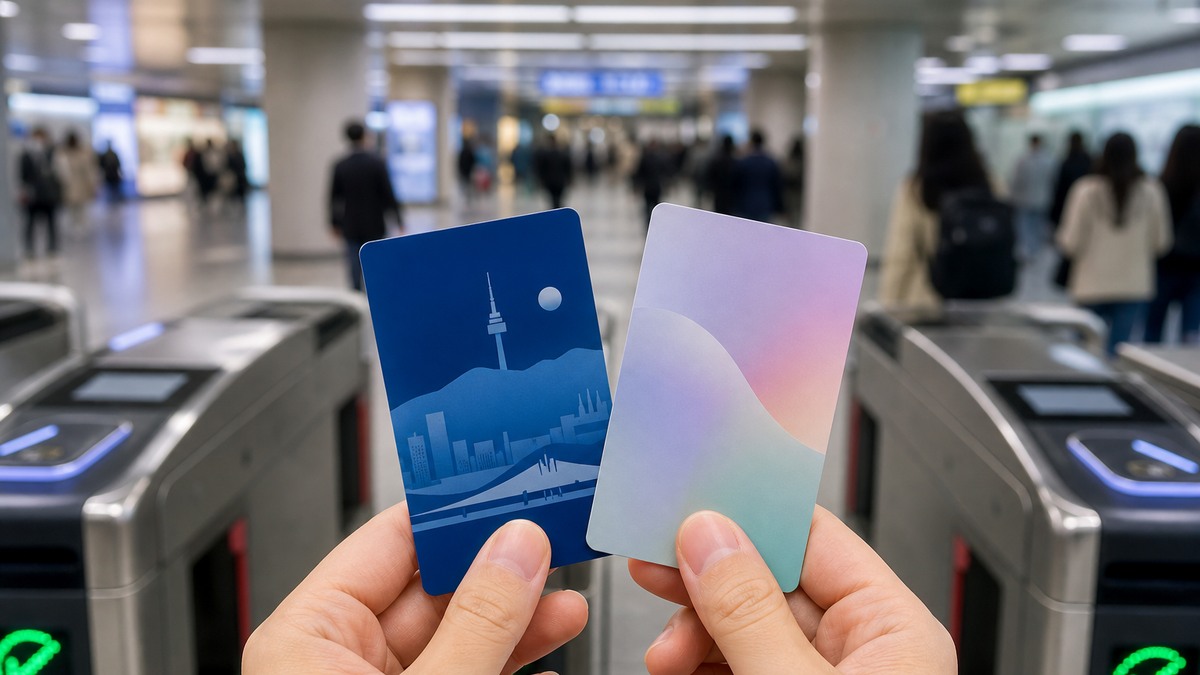
If you are visiting Seoul in 2026, the simplest answer is this: use T-money if you want maximum flexibility, and consider the Seoul Climate Card short-term tourist pass only if you will ride Seoul subway and buses often during a compact 1-, 2-, 3-, 5-, or 7-day stay.
The important 2026 update is not that every tourist suddenly needs a new resident-style pass. Seoul’s official English guidance says the existing 30-day prepaid Climate Card can be recharged until August 31, 2026, while short-term passes continue. Seoul also announced that international credit/debit cards and some mobile payment methods can be used at supported subway ticket machines for Climate Card short-term pass purchase or recharge.
2026 tourist answer after September 1
After September 1, 2026, most short-term visitors should ignore the resident-focused Climate Pass question and compare only two practical tourist choices:
- Short-term Seoul Climate Card if you will ride covered Seoul subway/bus services many times during 1-7 consecutive sightseeing days.
- T-money if you want the simplest flexible card for mixed Seoul movement, airport transfers, taxis, regional travel, and lower-ride days.
Seoul’s official Climate Card page says the 30-day prepaid Climate Card can be recharged until August 31, 2026, while the Climate Pass launches on September 1, 2026 as a resident/K-Pass-linked product. That does not remove the tourist short-term pass options. It does mean visitors should avoid asking for the wrong resident product and should check route coverage carefully when trips cross outside Seoul or use special lines.
Fast decision
| Traveler situation | Better default | Why |
|---|---|---|
| First-time visitor staying 2-4 days in Seoul with many subway/bus rides | Climate Card short-term pass | Fixed cost can beat repeated fares if you move around Seoul a lot each day. |
| Visitor who will use airport buses, taxis, KTX, intercity buses, or trips outside Seoul | T-money plus separate tickets | Climate Card coverage is limited; it is not a universal Korea transport pass. |
| Light itinerary with only 2-3 rides per day | T-money | Pay-as-you-go is simpler and may cost less. |
| Traveler arriving at Incheon Airport and expecting to tap into Seoul immediately | T-money or separate airport rail/bus ticket first | Incheon Airport boarding and airport-route use are not universal Climate Card scenarios. Plan the airport transfer separately unless official coverage confirms your exact route. |
| Visitor confused by the September 2026 Climate Card change | Short-term tourist Climate Card may still be relevant; resident Climate Pass/Plus is usually not | Do not buy or plan around a resident-focused product unless you clearly qualify. |
Short-term Climate Card prices for tourists
Official Seoul guidance lists these short-term pass prices:
| Pass length | Pass price | First-time card cost to remember |
|---|---|---|
| 1 day | KRW 5,000 | Add KRW 3,000 for the physical card if you do not already have one. |
| 2 days | KRW 8,000 | Add KRW 3,000 for the physical card if needed. |
| 3 days | KRW 10,000 | Add KRW 3,000 for the physical card if needed. |
| 5 days | KRW 15,000 | Add KRW 3,000 for the physical card if needed. |
| 7 days | KRW 20,000 | Add KRW 3,000 for the physical card if needed. |
Important activation rule: the validity starts on the date you charge the pass. You cannot charge a short-term pass in advance and save the validity for a later date. A one-day pass is therefore best used on a day when you will actually ride enough to justify it.
Rough break-even against T-money
Use this as planning logic, not exact fare math:
| Pass | Usually needs roughly this many separate covered rides to feel worthwhile | Best fit |
|---|---|---|
| 1 day | About 4 rides in one day | Dense sightseeing day inside Seoul. |
| 2 days | About 6 rides total | Two busy Seoul days with several neighborhood hops. |
| 3 days | About 7 rides total | Most practical short Seoul sightseeing trips. |
| 5 days | About 10 rides total | Seoul-based first trip with daily transit use. |
| 7 days | About 13 rides total | A full Seoul stay with frequent subway/bus movement. |
Transfer rules, route distance, fare changes, and excluded services can change the exact value. If your plan includes fewer rides than this, T-money is usually cleaner.
Buying and payment details tourists should know
Seoul announced international-card support for Climate Card short-term pass purchase/recharge at supported transit card vending machines: 440 machines at 273 subway stations on Lines 1-8, with internationally issued Visa/Mastercard-style credit and debit cards and supported mobile payments. Seoul’s announcement also notes an approximate 3.7% service fee when purchasing or recharging with overseas-issued cards.
Do not assume every machine or card will work the same way. Check the machine language/payment screen or ask station staff before relying on a specific payment method.
Climate Card vs T-money: the real difference
T-money is a stored-value transport card. You add money and pay as you ride. It is flexible, familiar, and useful across many everyday Korea travel situations.
The Climate Card short-term tourist pass is closer to an unlimited Seoul transit pass for a fixed number of calendar days. If your Seoul days are transit-heavy, the predictability is useful. If your days are light, taxi-heavy, or include many non-covered routes, the pass can be unnecessary.
The decision is not “which card is better?” The decision is “which card fits the way you will actually move?”
When the Seoul Climate Card is worth considering
Consider the Climate Card if most of these are true:
- You are spending several consecutive days mainly inside Seoul.
- You expect to ride subway or city buses many times per day.
- You are visiting multiple neighborhoods in one day, such as Myeongdong, Hongdae, palace areas, Gangnam, Jamsil, or Seongsu.
- You are comfortable checking coverage before using special lines, airport routes, or out-of-Seoul trips.
- You can buy or recharge the correct short-term pass at a supported station machine or sales point.
A common good-fit example is a first Seoul trip where you stay in Myeongdong or Hongdae, make several subway/bus hops each day, and keep most sightseeing inside the city.
When T-money is the safer default
Use T-money as the default if any of these apply:
- You want the least complicated card setup.
- You are taking only a few subway rides per day.
- You will use airport limousine buses, taxis, KTX, intercity buses, or regional trains.
- You are splitting time between Seoul and other cities such as Busan, Gyeongju, Jeonju, or Jeju.
- You do not want to check whether each route is covered.
- You arrive tired and just need a simple first transfer to your hotel.
For many travelers, the best setup is still T-money plus separate tickets for special transport. That may not be the cheapest in every case, but it is often the most forgiving.
Coverage cautions tourists should not ignore
Do not treat the Climate Card as an all-Korea pass. Official Seoul guidance lists included and excluded services, and the exclusions matter for visitors.
Before buying, check whether your actual route uses:
- airport limousine buses
- AREX airport services from Incheon Airport
- routes outside the covered Seoul range
- Sinbundang Line or other excluded services
- intercity buses, express buses, taxis, KTX, SRT, or regional trains
If those are central to your plan, T-money and separate tickets are usually cleaner.
How to choose by trip length
1-2 days in Seoul
T-money is usually safer unless you know you will ride transit heavily from morning to night. A short Climate Card can work, but only if your plan is dense enough to use it well.
3 days in Seoul
This is where the Climate Card becomes more interesting. If your route includes several neighborhood hops, palaces, shopping areas, and evening movement, compare the pass cost against your expected rides.
5-7 days in Seoul
A short-term Climate Card can make sense if most days are Seoul-based and transit-heavy. It becomes weaker if you add day trips, airport buses, taxis, or regional travel.
Korea route beyond Seoul
If Seoul is only one piece of a bigger Korea route, do not overbuild the whole trip around a Seoul-only pass. Use T-money for local movement, and plan KTX/SRT/intercity tickets separately.
Traveler steps before buying
- List your Seoul days only.
- Count whether you will ride subway or bus several times per day.
- Check whether your airport transfer is separate from the pass.
- Check whether your hotel area relies on any excluded line or route.
- Decide whether you want maximum simplicity or possible fixed-cost savings.
- At the station, confirm the machine sells or recharges the short-term tourist pass you want.
- If paying with an international card, verify that the machine supports it before starting the purchase.
Who should use it
The Climate Card short-term pass is strongest for travelers who are Seoul-focused, route-dense, and comfortable using public transport repeatedly. It is especially useful when your plan includes several subway-friendly neighborhoods each day.
Who should skip it
Skip it if your first priority is simplicity, if you are moving beyond Seoul quickly, if you rely on airport buses or taxis, or if your itinerary has light daily transit. T-money is less exciting, but it is harder to regret.
Practical examples
Example 1: Myeongdong first-timer, 3 full Seoul days
You stay in Myeongdong, visit palaces, Hongdae, Gangnam, Jamsil, and Seongsu, and use subway several times a day. A short-term Climate Card is worth checking.
Example 2: Hongdae arrival plus Busan after 2 nights
You land at Incheon, stay near Hongdae, then take KTX to Busan. T-money is likely simpler, with separate airport/KTX planning.
Example 3: Family with luggage and taxis
You will use taxi or airport bus for convenience and keep sightseeing light. T-money or normal payment methods make more sense than trying to force value from a transit pass.
Source and date caveat
This guide was refreshed against official Seoul Metropolitan Government information checked on August 28, 2026 KST, especially the official Climate Card page and Seoul’s March 2026 international-card payment announcement. Transit products, card acceptance, machines, fees, and route coverage can change. Before purchase, confirm current rules on the Seoul Metropolitan Government Climate Card page or with station staff.
Official sources used for this refresh:
- Seoul Metropolitan Government Climate Card information
- Seoul Metropolitan Government announcement on international-card payment support
Editorial review: this material refresh passed independent SEO/editorial QA on August 28, 2026 for title fit, search intent, source safety, internal-link safety, and brand safety.
Related Guides
- T-money vs Cashbee: Which Korea Transportation Card Should Tourists Use?
- Incheon Airport to Seoul in 2026: AREX, Airport Bus, Taxi, and Late-Night Options
- Korea Money Guide for Travelers: Cash, Cards, WOWPASS, and Where to Exchange
- Where to Stay in Seoul for First-Time Visitors
- 3-Day Seoul Itinerary for First-Time Visitors
FAQ
Can tourists still use the Seoul Climate Card after September 1, 2026?
Short-term tourist pass options remain the relevant product for visitors. The September 2026 resident-style change should not be treated as a mandatory tourist upgrade.
Is the Climate Card better than T-money?
Only for some Seoul-heavy itineraries. If you ride covered subway and buses many times in a compact stay, the Climate Card can help. If you travel lightly or leave Seoul, T-money is usually simpler.
Can I use the Climate Card from Incheon Airport?
Do not assume it covers your airport route. Plan the Incheon Airport transfer separately unless official route coverage clearly confirms your exact journey.
Can foreign visitors pay with an international credit card?
Seoul announced international card support at supported ticket machines for short-term pass purchase and recharge. Still, check the machine or ask station staff because acceptance can vary by machine, card network, or implementation status.
Should I buy both T-money and the Climate Card?
Some travelers may carry both, but most should avoid overcomplicating the setup. If your route includes many non-covered services, T-money plus separate tickets is cleaner. If Seoul subway/bus rides dominate, a short-term Climate Card can be enough for those covered days.