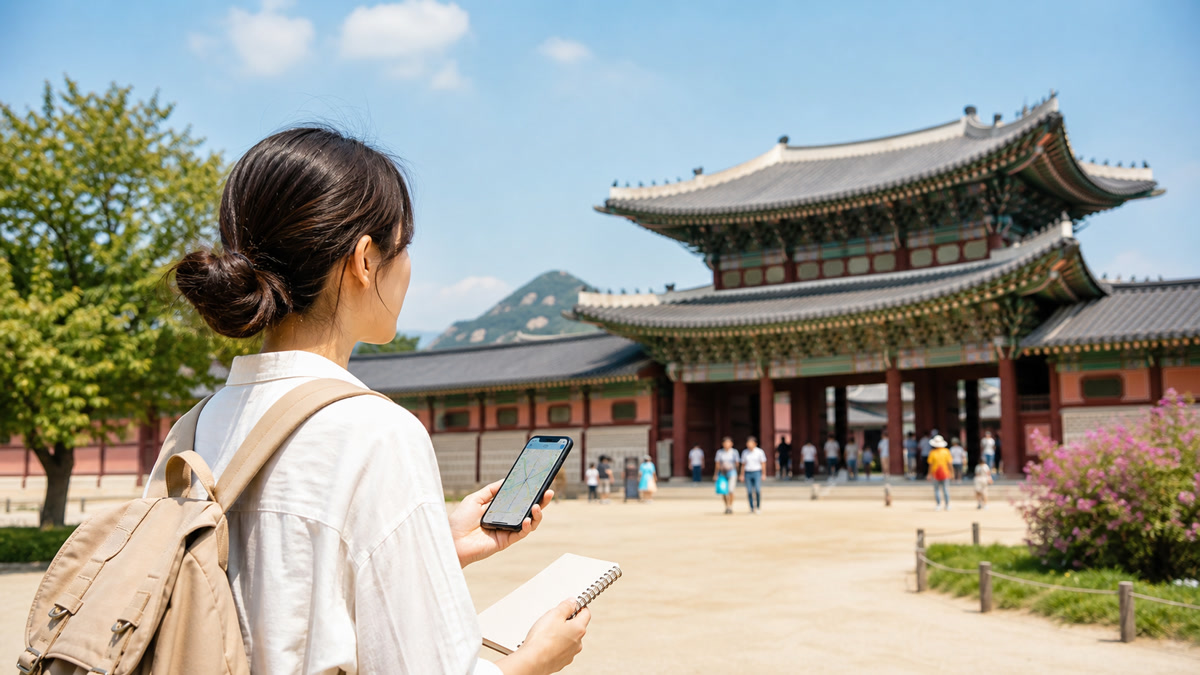
Gyeongbokgung Palace Guide for First-Time Visitors: Tickets, Hanbok, Timing, and Nearby Areas
Fast decision box: Add Gyeongbokgung Palace if this is your first Seoul trip, you want one major royal-palace stop, and you can give it a fresh morning or late-afternoon slot. Skip or shorten it if you already plan several traditional sites, dislike open-air walking, or have only one rushed Seoul day. Treat ticket prices, closure days, ceremony timing, and free-entry rules as changeable: confirm them on the official palace site close to your travel date.
Gyeongbokgung Palace is one of the easiest Seoul attractions to recommend and one of the easiest to plan badly. Many first-time visitors add it because it is famous, then arrive at the wrong time of day, underestimate the walking, or pair it with too many nearby stops until the whole day becomes a checklist.
The better way is to use Gyeongbokgung as a decision point: is this your main traditional Seoul experience, a short photo-and-history stop, or the anchor for a northern-Seoul day around Bukchon, Insadong, Gwanghwamun, and Cheonggyecheon?
This guide is written for practical first-time Korea travelers, not palace specialists. It focuses on when to add Gyeongbokgung, how much time to allow, where it fits in a Seoul itinerary, and what hotel or transport choices make the visit easier.
Should you add Gyeongbokgung Palace to a first Seoul trip?
For most first-time visitors, yes. Gyeongbokgung is the default royal-palace pick because it is central, recognizable, and easy to combine with several classic Seoul neighborhoods. It works especially well if you want one clear traditional landmark without building a whole day around museums.
Add it if you want:
- one major palace experience in Seoul;
- a simple morning plan before lunch in Insadong, Bukchon, or Gwanghwamun;
- a strong first-trip photo stop without leaving central Seoul;
- an itinerary anchor that still leaves room for shopping, food, or river/night activities later.
Consider skipping or reducing it if:
- you have only one full Seoul day and prefer food, shopping, or modern neighborhoods;
- your group dislikes open-air historical sites;
- rain, heat, or freezing weather will make long outdoor walking unpleasant;
- you are already visiting Changdeokgung, Jongmyo, a hanok village, or several heritage sites on the same trip.
The key is not whether Gyeongbokgung is “worth it” in the abstract. The key is whether it earns a prime time slot in your actual route.
How much time should you plan?
Use this simple timing rule:
| Traveler type | Time to allow | Best use |
|---|---|---|
| Quick first-timer | 60–90 minutes | Main gate, key courtyards, light walk, photos |
| Standard first visit | 2–3 hours | Palace grounds plus nearby Gwanghwamun or Insadong |
| Culture-focused visitor | Half day | Palace, museum time, slower photography, nearby traditional areas |
| Hanbok/photo-focused visitor | Half day or more | Rental, changing time, palace visit, photo buffers |
Do not schedule Gyeongbokgung as a tiny stop between two distant areas. The palace is central, but your real time cost includes arriving, orienting yourself, walking the grounds, taking photos, and moving to the next neighborhood.
If you are planning a three-day Seoul stay, Gyeongbokgung can fit into a half-day northern-Seoul block. If you are planning four or five days, give it more breathing room and avoid stacking every nearby attraction into the same morning.
Best time of day for first-time visitors
Morning is usually the safest slot. You start before fatigue builds, photos are easier, and the visit can flow naturally into lunch or coffee nearby. Late afternoon can also work if you want softer light and are not trying to squeeze in museums or multiple paid stops.
Avoid making it your first activity immediately after a long-haul arrival unless your hotel is nearby and your group is genuinely energized. A palace visit sounds gentle, but jet lag plus outdoor walking can turn it into a low-value first-day mistake.
For a smoother plan:
- Put Gyeongbokgung in the first half of a Seoul day.
- Pair it with one or two nearby areas, not five.
- Leave a weather backup if visiting in midsummer, winter, or rainy season.
- Check the official palace site shortly before visiting for current opening information, closures, ticket rules, and event or ceremony changes.
Tickets, hanbok, and free-entry expectations
Gyeongbokgung has historically been a low-friction palace visit for tourists, but the exact admission rules, closure days, guided-tour availability, and free-entry conditions can change. Do not build your article, itinerary, or budget around an old screenshot.
Practical rule: before your travel week, confirm on the official Royal Palaces and Tombs Center / Gyeongbokgung information pages:
- current opening hours;
- regular closure day;
- admission fee or free-entry conditions;
- palace-event or ceremony timing;
- hanbok-related entry rules, if relevant;
- museum or nearby facility status.
Hanbok rental can make the visit more memorable, but it changes the logistics. You need time to choose clothing, change, store belongings, walk more slowly, and return the rental. If your Seoul time is short, do not add hanbok just because it looks good in other travelers’ photos. Add it only if your group actually wants a photo-focused heritage stop.
How to fit Gyeongbokgung into a Seoul itinerary
Here are three clean planning patterns.
Pattern 1: Palace plus Insadong / Gwanghwamun
This is the simplest first-time route. Visit Gyeongbokgung in the morning, then move toward Gwanghwamun, Insadong, or nearby food and tea streets.
Best for:
- first-time Seoul visitors;
- travelers staying in Myeongdong, Jongno, City Hall, or Euljiro;
- groups that want culture without a full historical deep dive.
This pattern keeps movement short and avoids burning the day on subway transfers.
Pattern 2: Palace plus Bukchon / hanok atmosphere
This can be rewarding, but it needs restraint. Bukchon is a lived-in neighborhood, not a theme park. If you add it, go respectfully, keep noise down, avoid blocking residential alleys, and do not treat every doorway as a photo set.
Best for:
- culture-focused visitors;
- travelers who like slow walking;
- photographers who can visit early and behave respectfully.
Skip this combination if your group is already tired, the weather is poor, or you are trying to finish a huge Seoul checklist in one day.
Pattern 3: Palace as a short anchor before a modern Seoul day
Gyeongbokgung can also be a short morning anchor before shopping, cafés, a theme park, or an evening river/observation plan. This works when you want one traditional Seoul touchpoint without making the entire day historical.
Best for:
- travelers who get bored with long heritage visits;
- families or mixed-interest groups;
- short Seoul stays where every day needs variety.
Where should you stay if Gyeongbokgung is a priority?
You do not need to sleep next to the palace. What matters is whether your hotel area makes the northern-Seoul morning easy.
Good bases include:
- Myeongdong / Euljiro / City Hall: practical for first-timers who want shopping, transport, and central access.
- Jongno / Insadong: strong if you want heritage walks, traditional neighborhoods, and short hops to palaces.
- Hongdae: better for nightlife and younger travelers, but you will need a more deliberate morning transfer.
- Gangnam: convenient for some business or shopping plans, but less efficient if your Seoul days focus on palaces and northern neighborhoods.
If this is your first Korea trip and you are still choosing a base, do not pick a hotel only for one attraction. Pick the area that supports your whole Seoul route: arrival transport, food, shopping, day trips, and evening energy.
Transport and app implications
For most visitors, subway or taxi will be enough. The important part is not memorizing one route now; it is using reliable local map and transit apps once you know your hotel.
Plan around these practical points:
- Seoul addresses and route names can display differently across apps.
- Your best station or exit depends on which gate or nearby area you want next.
- Taxis can be useful for tired groups, but traffic around central Seoul can slow you down.
- If you are visiting with children, older travelers, or heavy camera gear, reduce the number of nearby add-ons.
This is why Gyeongbokgung works best inside a compact area plan rather than as an isolated dot on a map.
Common first-time mistakes
- Trying to visit every palace. One major palace may be enough for a first trip unless you love Korean history.
- Arriving too late in the day. You risk crowds, fatigue, and weak onward planning.
- Ignoring weather. Heat, rain, snow, and air quality can change the value of an outdoor heritage stop.
- Overloading nearby neighborhoods. Gyeongbokgung, Bukchon, Insadong, Gwanghwamun, museums, markets, and cafés do not all need to happen in one block.
- Treating hanbok as automatic. It is memorable for the right traveler, but it adds time and logistics.
- Using stale ticket information. Confirm current rules on official sources close to the visit.
Who should add it, and who should skip it?
Add Gyeongbokgung if you are a first-time Seoul visitor who wants one classic palace experience, especially if your Seoul itinerary already includes Myeongdong, Jongno, Insadong, or Gwanghwamun.
Shorten it if your trip is shopping-heavy, child-paced, weather-limited, or packed with long-distance day trips.
Skip it only if you strongly prefer modern Seoul, food markets, concerts, theme parks, or nature routes and do not care about royal-palace history. Even then, consider whether a short morning visit would give your trip better balance.
FAQ
Is Gyeongbokgung Palace worth it for a first Seoul trip?
Yes for most first-time visitors, especially if you want one iconic traditional Seoul stop. It is less essential if your itinerary is extremely short or if you already plan several heritage sites.
How long do I need at Gyeongbokgung?
Most first-time visitors should allow 60–90 minutes for a quick visit or 2–3 hours for a more comfortable palace-and-nearby-neighborhood block.
Should I rent hanbok for Gyeongbokgung?
Rent hanbok if your group wants a photo-focused experience and can spare the extra time. Skip it if your schedule is tight or you prefer a lighter visit.
What should I combine with Gyeongbokgung?
Insadong, Gwanghwamun, Bukchon, and central Seoul cafés are common pairings. Choose one or two, not every nearby attraction.
Should I visit Gyeongbokgung on arrival day?
Usually no, unless your hotel is nearby and you arrive early with enough energy. It is better as a fresh morning plan after you have slept.
Where should I check current ticket and opening information?
Use the official Royal Palaces and Tombs Center / Gyeongbokgung pages close to your travel date. Treat older blog details and social-media screenshots as secondary.
Related Guides
- How Many Days in Seoul Do You Really Need?
- Where to Stay in Seoul for First-Time Visitors
- Korea Travel Apps for a First Trip
- Seoul Rainy-Day Itinerary for First-Time Visitors
Source/date caveat
This guide uses official palace and Seoul travel-source checks from July 2026 for planning context. Opening hours, admission, closure days, ceremony schedules, guided tours, and hanbok entry rules can change. Confirm operational details on the official palace website during your travel week before locking your plan.