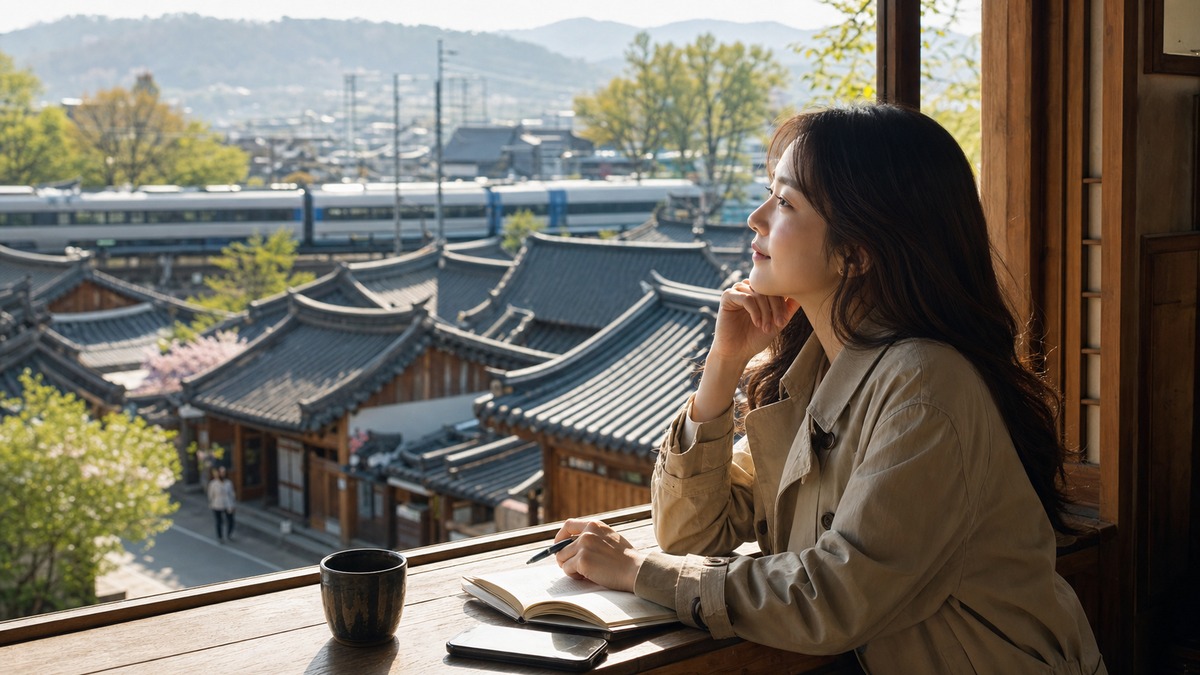
Gyeongju and Jeonju make an attractive heritage pairing, but they are not interchangeable stops. Gyeongju is broad and site-based: royal tombs, temples, museum time, and movement between historic areas. Jeonju is compact and experience-led: hanok lanes, food, small shops, and a relaxed old-town mood.
That difference is why the best Gyeongju-to-Jeonju plan is usually not a rushed day trip. It is a one-night bridge. You can technically sample Jeonju in a short visit, but the city becomes much better when you have time to arrive, drop bags, walk, eat dinner, and leave the next morning without racing the clock.
Use this guide with these related Jeonju planning pages:
- Gyeongju vs Jeonju
- Busan to Jeonju
- Jeonju Hanok Village vs City Center
- Jeonju food itinerary
- how many days in Jeonju
Quick answer
Choose an overnight if Jeonju is more than a quick meal stop. The overnight gives you the part of Jeonju that is hardest to get on a compressed schedule: a slow evening, easier food choices, and a second chance to walk the old streets before leaving.
Treat it as a day-trip-style stop only if you are traveling light, comfortable with a long transit day, and happy with one main walk plus one meal. If you have children, large luggage, a tight onward connection, or a strong interest in food, stay the night.
Why this route needs pacing
On a map, Gyeongju and Jeonju look like a neat heritage route. In practice, they reward different travel styles. Gyeongju often takes energy because the main sights are not all in one tiny zone. By the time you finish a proper Gyeongju day, adding a full Jeonju experience can turn into a logistics exercise.
Jeonju works best when you are not simply passing through. Its value is in small decisions: where to eat, which lane to wander next, whether to pause for tea, and how long to stay out after dinner. If every decision is controlled by the next bus, train, or check-in deadline, the city still looks pretty but feels thinner.
When a day trip-style stop works
A short Jeonju stop can work if your expectations are narrow. Plan it as a taste, not a complete visit. Focus on Hanok Village and nearby food rather than trying to cover museums, viewpoints, markets, outfit rentals, and multiple restaurants in one go.
This version suits solo travelers or couples with compact bags. It is less suitable for families, older travelers, or anyone carrying full-size suitcases. The main risk is not that Jeonju is difficult; it is that the day becomes dominated by storing bags, finding transport, and checking the time.
If you choose the short version, keep the rule simple: one walking area, one main meal, one realistic departure plan.
Why one night is better for most visitors
A one-night stay changes the feel of the route. You can leave Gyeongju without trying to squeeze in too many final sights, arrive in Jeonju with enough energy to explore, and let dinner become part of the trip rather than a deadline. The next morning then becomes a useful buffer for breakfast, photos, or an easy onward move.
This is especially helpful if Jeonju sits between larger Korea stops such as Seoul or Busan. Instead of making Jeonju fight for space in the itinerary, you give it a clear job: a slower food-and-heritage pause between more demanding travel days.
A practical one-night plan
A clean Gyeongju-to-Jeonju overnight could look like this:
1. Finish your main Gyeongju sightseeing before transfer day. 2. Keep the travel morning simple; do not add too many “last stops.” 3. Arrive in Jeonju and go directly to your accommodation. 4. Walk Hanok Village and nearby streets in the afternoon or early evening. 5. Plan one satisfying dinner rather than a complicated food crawl. 6. Use the next morning for a second walk, breakfast, or an onward transfer.
This rhythm protects both cities. Gyeongju remains the deeper historical sightseeing stop. Jeonju becomes the compact, atmospheric stop where food and walking do the work.
Where to stay after arriving from Gyeongju
Stay in or near Hanok Village if atmosphere matters most. This is the best fit for travelers who want to step outside and immediately be in the old streets. It also works well when your Jeonju plan is mainly walking, snacks, dinner, and photos.
Choose the city-center side if practical comfort matters more. This can be better for luggage, late arrivals, early departures, families, or travelers who prefer a more conventional hotel setup. You may trade some doorstep charm for easier movement, but that is often the smarter choice on a multi-city Korea route.
Before booking, compare the tradeoffs in Jeonju Hanok Village vs City Center.
Food planning on this route
Jeonju is famous for food, but more restaurants do not automatically make a better day. After traveling from Gyeongju, most people enjoy Jeonju more if they choose one main meal and leave room for casual snacks or a relaxed café stop.
If food is the main reason you are adding the city, do not compress it into a tired arrival window. Stay overnight and use the Jeonju food itinerary to shape the day around your actual energy level.
Common mistakes
Avoid these planning traps:
- leaving Gyeongju late and expecting Jeonju to feel relaxed
- booking a photogenic hanok without checking luggage needs
- planning too many meals for one arrival evening
- treating Jeonju as a checklist instead of a compact walking stop
- ignoring the next morning’s onward transfer
The route works best when it has breathing room. If the schedule looks impressive but leaves no margin, simplify it.
Bottom line
Gyeongju to Jeonju is strongest as a one-night heritage-and-food bridge. Use Gyeongju for deeper historical sightseeing, then let Jeonju slow the trip down with hanok streets, dinner, and an easier morning. If you cannot give Jeonju that space, keep the visit short and focused—or choose the city that better matches your first Korea itinerary.