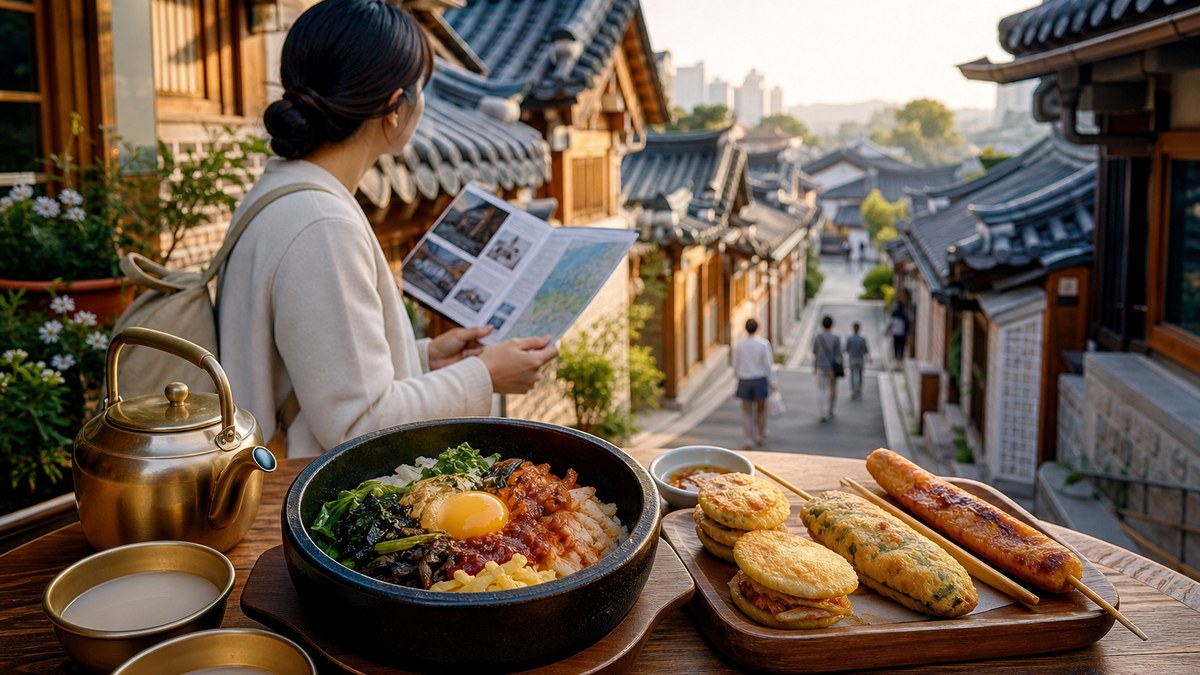
Jeonju is famous for food, but a good first visit is not about eating every well-known dish in one day. The best plan is paced: one signature meal, a snack walk through Hanok Village, a real rest break, and a flexible dinner based on appetite. That way you enjoy the city instead of turning it into a food checklist.
This guide shows how to structure a practical Jeonju food day for first-time visitors. Use it with these live planning pages:
- Jeonju Hanok Village vs City Center
- Jeonju Hanok Village guide
- 1-day Jeonju itinerary
- 2-day Jeonju itinerary
- how many days in Jeonju
Quick answer
For most first-time visitors, the best Jeonju food itinerary is:
1. Arrive and handle luggage before serious eating. 2. Start with a light snack or cafe stop near Hanok Village. 3. Walk the village lanes and try one or two small bites. 4. Choose one proper Jeonju meal for lunch or dinner. 5. Use the other meal slot flexibly, depending on appetite.
This gives you the Jeonju food experience without making the day too heavy. If you are staying overnight, save the most relaxed meal for after check-in. If you are visiting as a day trip, limit yourself to one main meal and a snack walk.
What to prioritize in Jeonju
Jeonju is closely associated with bibimbap, generous Korean table spreads, bean sprout soup with rice, traditional sweets, market snacks, and casual street food around Hanok Village. You do not need all of them.
Think in categories instead:
- One signature dish: bibimbap or another classic Jeonju meal.
- One comfort dish: soup, rice, noodles, or something simple.
- A few small bites: shareable snacks while walking.
- One pause: tea, coffee, or dessert.
This structure works better than chasing individual restaurants across town and leaves room for weather, lines, group energy, and unexpected finds.
Morning: arrive and start light
If you arrive in the morning, do not rush straight into the heaviest meal of the day. First, solve the practical problems: luggage, directions, hotel check-in timing, or where you will return later. Once those are handled, walk toward Hanok Village and begin with a cafe, tea stop, small sweet, simple soup, or easy street snack.
Starting light matters because Jeonju is a walking city for visitors. You will enjoy the lanes more if you are not already too full, overheated, or worried about your bags.
Late morning: snack through Hanok Village
Hanok Village is the easiest place to combine sightseeing and food. Instead of treating snacks as separate destinations, fold them into your walking route. Eat one thing, wander, take photos, visit a small sight or shop, then decide whether you actually want another bite.
A realistic snack walk might include:
- one savory snack
- one sweet item
- one drink
- one rest stop between busy lanes
Do not feel obligated to join every line. If a stall is crowded or your group is losing energy, skip it. Jeonju’s appeal comes from the rhythm of walking, tasting, and pausing, not from completing a viral list.
Lunch: choose one main meal
Lunch is a good time for your main Jeonju meal if you arrived early and are not rushing. Bibimbap is the classic first-time choice. A Korean table spread suits groups who want a slower meal with side dishes. Bean sprout soup with rice is better if you want something warm, local, and not too heavy.
Choose by fit, not fame: bibimbap for the iconic food moment, a table spread for sharing, soup with rice for comfort, or casual noodles and rice dishes for families and tired travelers.
Have a backup option nearby. A less famous meal eaten calmly is better than a stressful search while everyone is hungry.
Afternoon: walk, digest, and pause
After lunch, do not add another full meal immediately. Use the afternoon for Hanok Village lanes, nearby heritage sights, shopping, or a cafe break. A tea or coffee stop helps with weather, phone charging, children, older travelers, and deciding whether dinner should be light or full.
Jeonju feels better when food supports the walk rather than interrupting it every few minutes.
Dinner: keep it flexible
Dinner should depend on how the day has gone. If lunch was light and you are staying overnight, dinner can be your most relaxed sit-down meal. If lunch was heavy and you have already had snacks, choose soup, noodles, a simple Korean meal, or shared bites.
If you are returning to another city the same day, be practical. Avoid a heavy dinner right before a long transfer unless your schedule has plenty of buffer. A comfortable departure is part of a successful day trip.
For overnight visitors, dinner has one major advantage: you are no longer racing the clock. This is when staying near Hanok Village or choosing a convenient city-center base can shape the experience. For accommodation tradeoffs, see Jeonju Hanok Village vs City Center.
Overnight version
An overnight food plan is easier and more satisfying than a compressed day trip. Split the eating across two days:
- Arrival afternoon: snack walk in Hanok Village.
- Dinner: one proper meal after you have checked in.
- Next morning: soup, rice, cafe breakfast, or a lighter local option.
- Before leaving: one final drink or snack if it fits naturally.
This version gives you more variety without forcing too many dishes into one afternoon.
Day-trip version
For a day trip, be stricter. Pick one main meal, one snack walk, and one rest break. A simple route is:
1. Arrive and handle luggage or station logistics. 2. Walk through Hanok Village with one or two snacks. 3. Sit down for your main Jeonju meal. 4. Take a cafe break or short heritage walk. 5. Leave with enough energy for the return journey.
Do not build the day around two heavy meals unless your transport plan is very relaxed.
Common mistakes
Avoid these first-time food mistakes:
- eating too heavily immediately after arrival
- planning too many famous dishes too close together
- choosing restaurants only by online popularity
- ignoring walking distance between stops
- skipping rest breaks because they do not feel like “sightseeing”
- leaving dinner fixed even when nobody is hungry
Bottom line
A good Jeonju food itinerary is paced, local, and realistic. Choose one signature meal, snack slowly through Hanok Village, add a cafe or tea pause, and keep dinner flexible. Jeonju is a food city, but it is also a walking city. Plan for both, and your first visit will feel much better than any checklist.